Scottish Gaelic Nature and Wildlife Vocabulary: Flowers, Birds and Wild Places
The Scottish landscape is soaked in Gaelic. Every glen, loch, burn and hill carries a name that describes something real about the land, and the vocabulary of nature is where the language feels most alive. When you learn Scottish Gaelic nature words, you do more than expand your word count: you start reading the landscape itself, from the heather on the moors to the birds wheeling over a sea loch.
This guide gathers the essential Scottish Gaelic words for plants, birds, animals and wild places, with pronunciation help and the stories behind the names. It is written for learners at any level who want to connect their studies to the Highlands and Islands they love. And because nature words stick best when you meet them often, we will finish with a simple way to fold them into a daily routine.
The Landscape Underfoot: Hills, Glens and Water
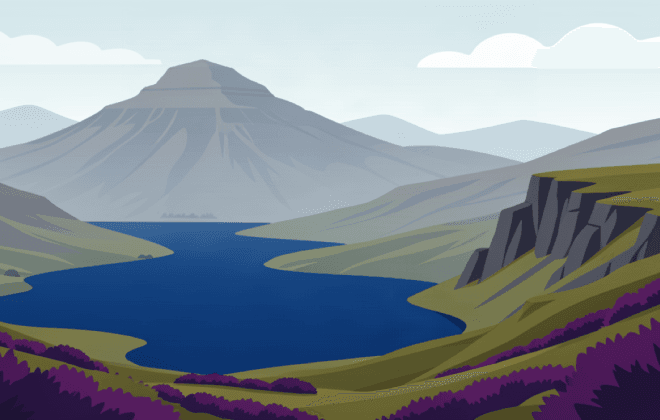
Much of the Scottish Gaelic landscape vocabulary is already familiar through place names, but few learners realise how precise these words are:
- beinn (ben, mountain)
- cnoc (hill)
- gleann (glen, valley)
- loch (loch, lake)
- sruth / abhainn (stream / river)
- mòinteach (moorland, peat bog)
- coille (wood, forest)
- machair (the fertile, low grassy plain by the sea, found especially in the Hebrides)
The machair deserves special mention. It is a uniquely Scottish coastal habitat, rich in wildflowers, and its name has entered the English conservation vocabulary. Knowing a word like machair shows you how Gaelic encodes ecological knowledge that English often lacks.
Water is everywhere in the Highlands, and Gaelic reflects it: a sruthan is a small stream, a eas is a waterfall, am muir is the sea, and an caolas is a narrow strait or kyle. Place names like Kyle of Lochalsh and Kyleakin come directly from caolas.
Flowers and Plants That Paint the Moor
Flower names are some of the most poetic in the language, and they help you identify the season at a glance:
- fraoch (heather)
- bog an luachair (bog cotton – literally the soft thing of the rushes)
- lus nam blàr (the plant of the fields, often used for a native wildflower)
- bealaidh (broom)
- darach (oak)
- beithe (birch)
- giuthas (Scots pine)
- fraoch bán (white heather, a symbol of good luck)
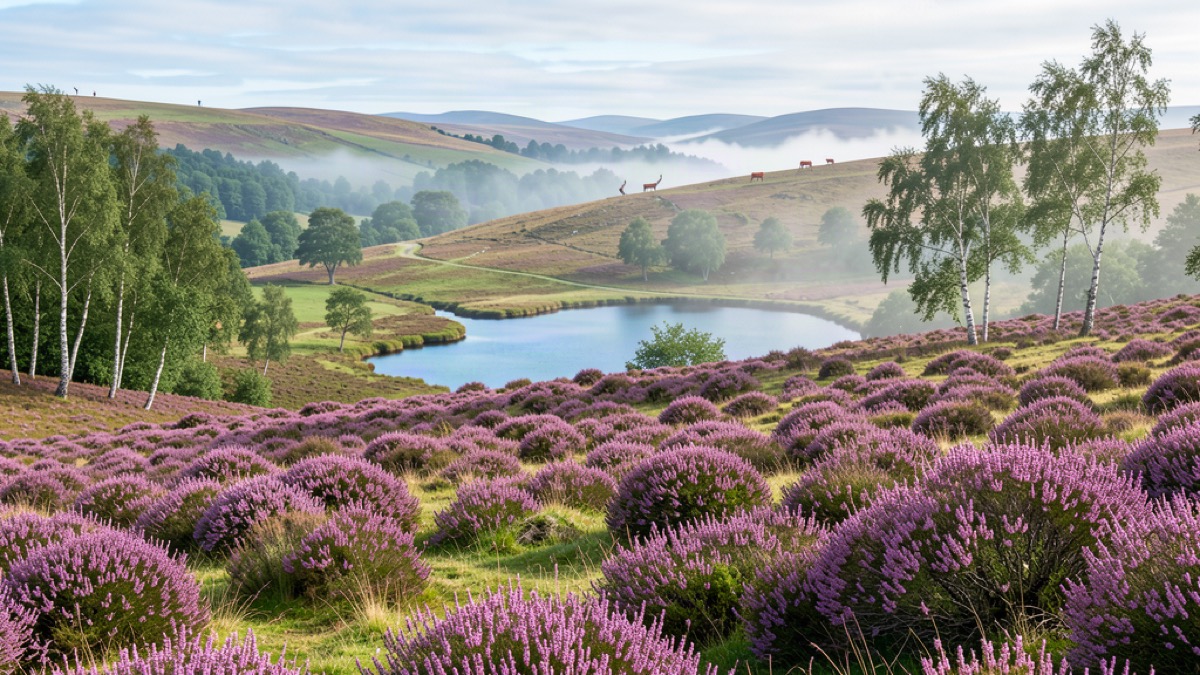
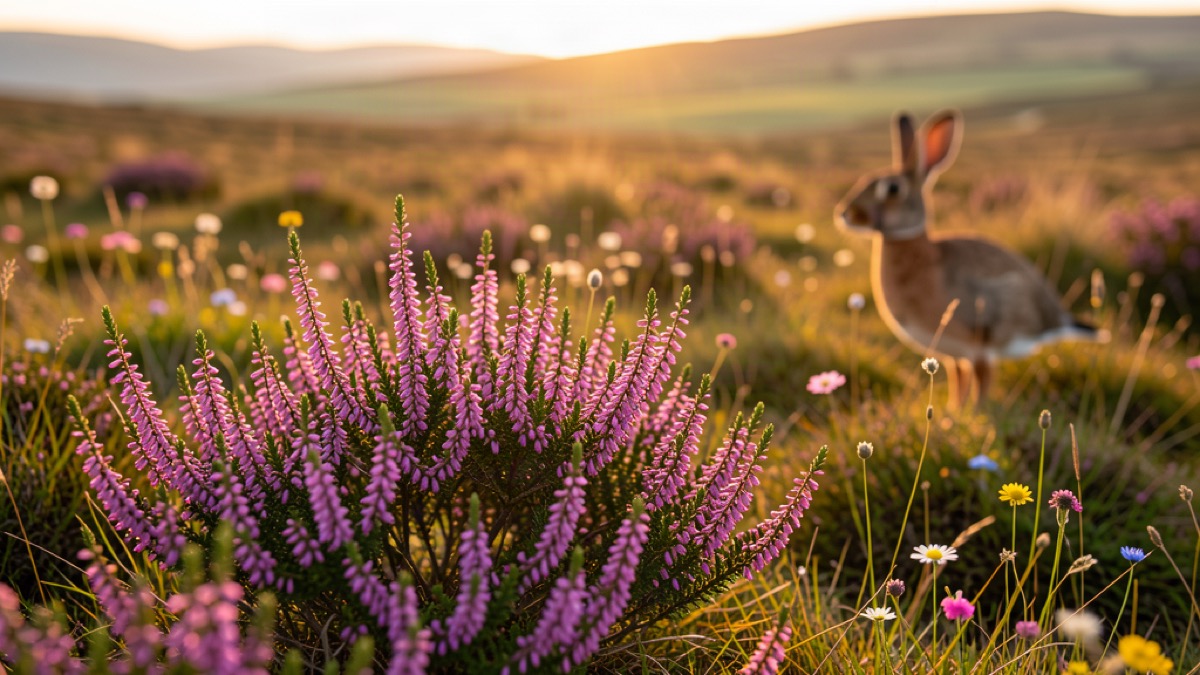
Heather, fraoch, dominates the uplands and is the plant most visitors associate with Scotland. In August the moors turn purple as the bell heather blooms, and Gaelic speakers will talk of am fraoch a’ fàs (the heather growing). The birch tree, beithe, gives its name to many places, and its slender white trunks are a feature of the native Caledonian woods alongside giuthas, the Scots pine.
Birds of Sea, Shore and Glen
Bird names in Scottish Gaelic often imitate the sound the bird makes, which makes them surprisingly easy to remember:
- fìdeag (oystercatcher – from its shrill piping call)
- curracag (lapwing – named for its crest, which resembles a cap, currac)
- eun-mara (seabird; literally sea bird)
- iasgair (kingfisher)
- fitheach (raven)
- cailleach-oidhche (owl – literally the old woman of the night)
- traogh (sanderling or a shore wader)
- gèadh (goose)
- eala (swan)
- spearrag (skylark)
The raven, fitheach, is a bird of great significance in Gaelic tradition, appearing in stories and omens. The skylark, spearrag, is celebrated for its song over the machair in summer. Listening for these birds while you walk is one of the most immersive ways to rehearse the vocabulary, because the word and the bird are tied together in the sound.
Onomatopoeia is your friend throughout the bird list. The oystercatcher’s fìdeag mimics the piercing two-note whistle it makes in flight, the curlew is known as eun-bràghad or sometimes guilbneach, and the cuckoo is simply cuthag, the very sound it calls. When you cannot remember the name for a bird, try to say what you hear: the Gaelic name often turns out to be the call itself. This is a memorable hook for a beginner, and it is one reason bird vocabulary sticks faster than almost any other noun group.
Animals of the Wild
The larger animals of the Highlands carry names that every learner should know:
- fèidh (red deer – fèidh ruadh for the red deer)
- fiadh (deer generally)
- sionnach (fox)
- mathan (bear, now only historical but still in place names)
- buidheag (yellowhammer or a small bird; also used for a fond term)
- damh (stag, ox)
- muc-fhiadhaich (wild boar; literally wild pig)
- eathar (beaver, a species recently reintroduced and spoken about often)
The red deer, fèidh, is the icon of the Highlands, and the roaring of stags during the autumn rutting season, the damh calling, is an unforgettable experience. With rewilding projects bringing beavers back to riversides, eathar has re-entered everyday conservation talk. Learning these names lets you talk about the living landscape, not just the tourist brochure.
Smaller creatures are equally rewarding and far less documented. An otter is a dòbhran, a badger is a broc, a seal is a ròn, and along the coast you might hear of the bradan (salmon) returning to spawn. Knowing the word for otter transforms a day by a river: the moment a dòbhran slips into view, you have a native word ready and a memory that will anchor it forever. These are the words that make conversation with a Gaelic speaker in the Highlands feel natural rather than formal.
The Sea and the Coast
For a nation of islands and sea lochs, the coastal vocabulary is essential:
- tràigh (beach)
- cladach (shore, coast)
- geodha (a blowhole or narrow sea inlet, borrowed into English)
- sgeir (a sea rock or skerry)
- eilean (island)
- rubha (a headland or point)
- caolas (a strait or narrows)
The walls of a geodha and the rocks of a sgeir are daily reality for island communities, and these words recur throughout place names around the Hebrides. When you hear of a car ferry crossing a caolas, or a shore walk along a cladach, you are using the exact vocabulary of the fishing and crofting families who have kept the language alive.
Reading the Place Names
Once you know the core nature words, the map of Scotland opens up. A glen like Glen Coe contains gleann (glen) and the name Coe comes from the river. Place names ending in -more, -beg and -dubh come from mòr (big), beag (small) and dubh (black). Understanding the building blocks turns every map into a lesson:
- Allt (burn, stream) – Allt a’ Chruinn
- Sgurr (a sharp rocky peak) – the Sgurr of the Cuillin range
- Bealach (mountain pass) – numerous bealaichean across the Highlands
- Inver / Inbhir (confluence, river mouth) – Inverness, Inveraray
Working through place names is one of the most enjoyable routes to vocabulary growth, because the words come from the terrain itself. Our guide to Scottish place names and their meanings covers glen, loch, ben and strath in detail, and pairs perfectly with the nature words here.
Turning Nature Words into a Routine
Nature vocabulary is ideal for spaced repetition because the words are vivid and picture-rich. A strong approach is to attach each word to a mental image of the actual place or creature: see the fraoch on the moor, hear the curracag over the machair. Images anchor vocabulary far better than translation alone.
Build a small deck of picture cards rather than simple English-to-Gaelic pairs. On the front, a photo of a birch grove or a lapwing; on the back, the Gaelic word and its pronunciation. Review the deck on your morning walk or commute, and add one new bird, plant or landscape word each day.
For a guided way to practise these words daily, a spaced repetition deck built around themed word lists can keep you consistent without the effort of maintaining it yourself. Thematic lists are the natural home for nature vocabulary, because every item connects to the others through the world it describes.
The Living Language of the Land
Scottish Gaelic nature vocabulary is far more than a set of nouns. It is the vocabulary of a people who read their environment closely, who named every burn and hill with a reason, and who could tell the season, the weather and the wildlife from a single glance at the moor. By learning these words, you connect to that tradition and make the landscape part of your language learning.
Begin with the land under your feet: beinn, gleann, loch, coille, machair. Then add the plants that colour the seasons, the birds that fill the air, and the animals that roam the wild places. Today’s walk can be tomorrow’s vocabulary lesson, and every step you take in the Highlands becomes a step deeper into the language.
The weather that shapes these wild places has its own rich vocabulary, so our guide to Scottish Gaelic weather words will help you describe the sky above the moor. To describe what you see, pair the nouns with Gaelic colours and adjectives, and keep your ear tuned by hearing these words used in the wild through the best Scottish Gaelic podcasts.