Norse and Latin Loanwords in Scottish Gaelic
Every language carries the fingerprints of the peoples who shaped its history, and Scottish Gaelic wears two especially deep imprints: the classical world of Rome and the maritime world of the Norse. Look closely at the Gaelic vocabulary for church, wine, and books, and you find the influence of Latin. Listen to the Gaelic of the sea, boats, and island skerries, and you meet the Vikings. This article traces how Latin and Norse loanwords entered Scottish Gaelic, what they reveal about the cultures that loaned them, and how recognising this borrowed vocabulary can make Gaelic significantly easier to learn.
Two different kinds of influence
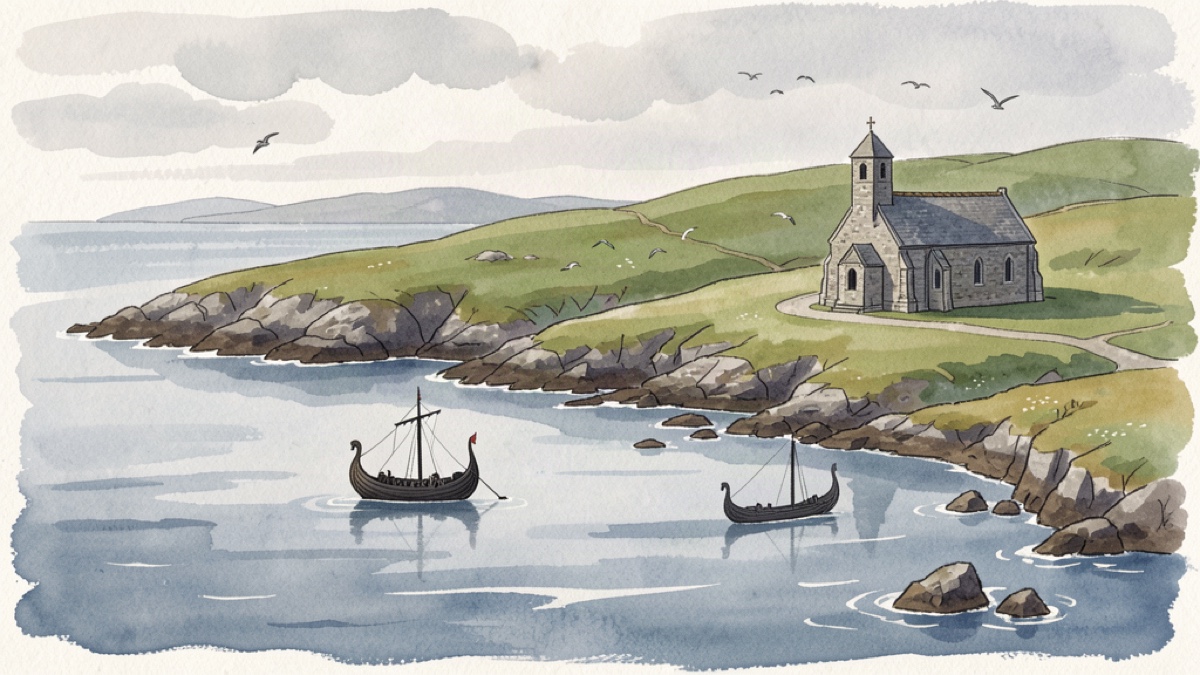
The Latin and Norse influences on Scottish Gaelic arrived through completely different channels, and the difference matters for how the words behave. Latin came largely through writing, religion, and the Church, spreading early and deep across the whole Celtic zone. Norse came through settlement and daily contact along the coast, arriving later and staying concentrated in specific regions. The result is two visible layers in the vocabulary: an older, church-linked Latin layer and a coastal Norse layer thickest in the Hebrides and the far north.
In linguistic terms, these are classic cases of borrowing driven by prestige and contact. Latin was the language of the Church, learning, and the Roman world, so the words Gaelic adopted from it cluster around faith, literacy, and classical objects. Norse was the language of raiders who became settlers, shipbuilders, and farmers, so its loanwords cluster around the things a seafaring community actually touched: boats, fish, rocks at sea, and the geography of the western seaboard.
The Latin layer: church, learning, and everyday classics
The most striking Latin loanwords in Scottish Gaelic are the ones we now think of as entirely Gaelic. Take “eaglais,” the Gaelic word for church. It comes from the Latin “ecclesia,” which itself came from the Greek “ekklesia,” meaning an assembly. The word travelled from Greece through Rome to the Celtic-speaking world, settling into Gaelic as a completely naturalised term. Even learners who have never studied Latin recognise the echo.
For anyone reading in Gaelic, the written heritage is unmistakable. “Leabhar” (book) derives from the Latin “liber.” “Sgoil” (school) comes from “schola.” “Sgrìobh” (to write) traces to the Latin “scribo,” and “sgriobhadh” (writing) shares the same root. The early Christian monks brought literacy to the Highlands, and the words for the tools of their trade came with them. “Sagart” (priest) is a direct descendant of “sacerdos,” and “crann-ceusaidh” (crucifixion) and the cross itself, “cros,” came from “crux”.
Some Latin loans are so woven into daily Gaelic that you would never guess their origin. “Fìon” (wine) is the Latin “vinum,” identical in spirit to the wine words of French, Spanish, and Italian. “Sràid” (street) is the Latin “strata,” the paved Roman way. Not every Latin loan survived into modern use, but the pattern is consistent: wherever the Roman world introduced an object, a concept, or an institution, the Latin word often came along and eventually became Gaelic.
Recognising the Latin layer is a huge boost for beginners. If you already know some Latin, French, Spanish, or Italian, you will find that a meaningful share of Gaelic abstract and learned vocabulary is recognisable. “Còmhdhail” (a congregation or gathering, from Latin “conventus”), “àrd” (high, from the Latin “arduus”), and countless others give you a running start. The key is knowing that these learned words frequently obey a Celtic sound transformation, so the echo is there even when the spelling looks alien.
The Norse layer: boats, skerries, and the great western seaboard
If Latin is the language of the steeple, Norse is the language of the sea. The Vikings began raiding the coasts of Scotland in the late eighth century, and in the following centuries significant Norse settlement took hold in the Hebrides, Orkney, Shetland, and the far north of Caithness and Sutherland. These settlers did not just pass through; they stayed, farmed, and intermarried, and their language left a permanent mark on the Gaelic spoken all around them.
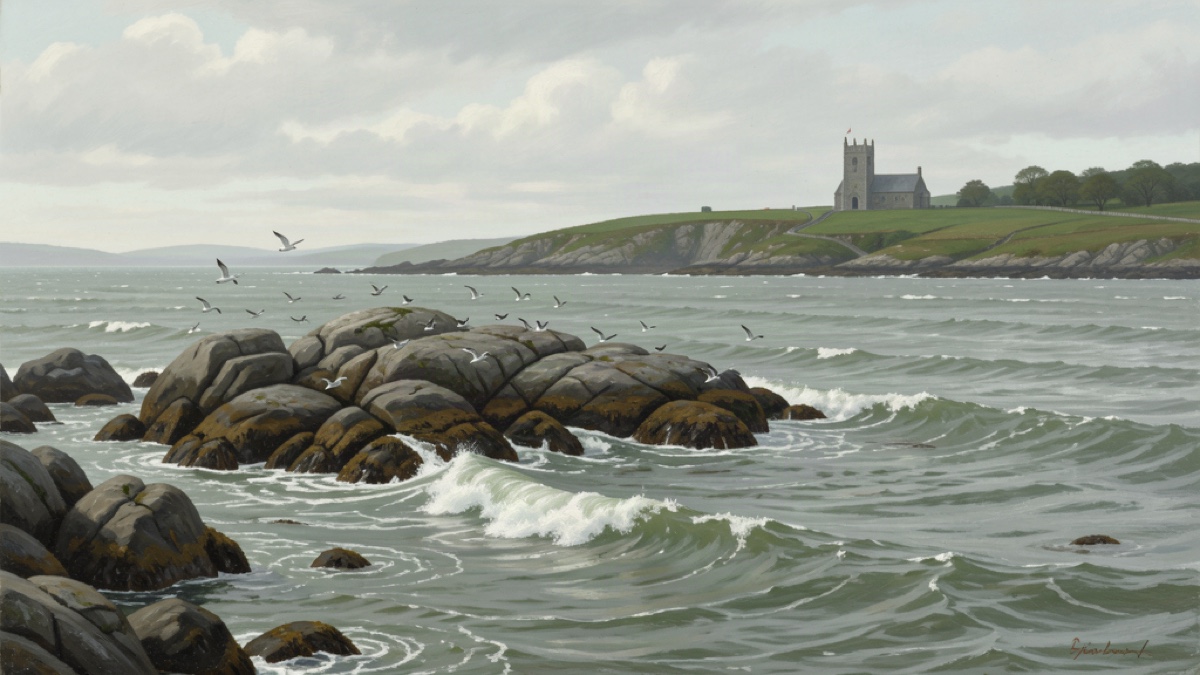
The clearest Norse traces are in place names, which is where the geography of the Vikings is written directly onto the map. The Norse word for a rocky sea islet or reef is “sker,” and it appears all over the Scottish coast in names containing “-sgeir,” rendered in English as “skerry.” A Norse “vik” (bay) became the many Gaelic and English place names ending in “-ay,” “-øy,” or anglicised “-a” for islands, such as the famous Hebridean islands where the Norse word for island, “ey,” survives in names like Mingulay and others. The Norse “bost” (farmstead or settlement) is preserved in place names across Lewis, and “ness” (headland) survives in both Gaelic and Scots geography.
Beyond place names, Norse settled into the working vocabulary of fishing and seamanship. A “sgeir” or rocky reef, the Gaelic “bàta” for boat (from the Old Norse “bátr”), and a range of terms for fish, seabirds, and coastal features all entered Gaelic through everyday contact on the shore. Because Norse-speaking and Gaelic-speaking communities lived side by side for centuries, the borrowing was natural and unforced, the way neighbouring languages borrow from each other all over the world.
The Norse layer is regionally patchy, which is itself a fascinating lesson. A learner from mainland Argyll will encounter fewer Norse loanwords than a speaker from Lewis or the Isle of Skye, where Norse influence was strongest. Hiking the vocabulary maps of Scottish Gaelic shows you exactly where the Viking footprint was deepest, and it explains why island dialects sound distinctly different from mainland ones.
Why borrowed words help you learn faster
For a learner, recognising these two layers is not just trivia; it is a genuine study hack. Every word you can consciously trace to a Latin or Norse source is a word that arrives pre-loaded with a meaning and a story. You are not memorising an arbitrary string of sounds; you are adding a familiar concept wearing a Gaelic costume.
Start with the Latin layer because it travels across languages. When you meet an unfamiliar Gaelic word in the learned register, ask yourself whether it hides a Latin root you already know. “Ceud” and “cead” (permission, from Latin), “eachdraidh” (history, from the Latin “historia”), and the many “-ach”,”-ai” abstractions resolve faster when you treat them as Latinate words that passed through a Celtic sound filter.
For the Norse layer, learn the geography first. Master the handful of Norse place-name elements, then let them unlock whole regions for you. Reading a map of the Hebrides becomes a translation exercise, and each place name becomes a small history lesson about the people who named it. That kind of context is far more memorable than a bare vocabulary list.
Putting it together: a small comparative table
A quick comparison shows the two layers side by side:
Latin origin, learned layer: eaglais (church, from ecclesia), leabhar (book, from liber), sgoil (school, from schola), sagart (priest, from sacerdos), fìon (wine, from vinum), sràid (street, from strata). The meanings align with Christian Europe and classical literacy.
Norse origin, coastal layer: bàta (boat, from bátr), sgeir (skerry, rocky reef), and the place-name elements -bost, -ness, -vik, -ey that shape island geography.
The contrast could not be sharper. Latin gave Gaelic its words for the soul, the book, and the church. Norse gave it words for the hull, the reef, and the bay. Together they show a people who were both deeply European and profoundly Atlantic, anchored to the classical past and afloat on the northern sea.
How to study Gaelic vocabulary with history in mind
Here are concrete ways to make this knowledge work in your daily study.
Use the echo. When you learn a new Latin-derived Gaelic word, say the Latin source out loud next to it. Locking the two together exploits your existing knowledge and creates a stronger memory trace than isolated learning.
Map the Norse names. Take a map of the Hebrides and the north coast, circle every place name ending in “-ay,” “-bost,” “-ness,” or containing “sker,” and write the Norse meaning beside it. You will build a mental atlas of Viking Scotland and simultaneously fix a set of genuinely useful geography words.
Connect the layers to the apps you already use. If you are learning with a spaced repetition deck, deliberately flag borrowed words and add the root as an extra field. This small note is enough to trigger the link on later revisions, turning a recall session into a mini history lesson.
Study the two registers in separate batches. Keep the learned, Latinate vocabulary separate from the coastal, Norse vocabulary in your own notes. Grouping by origin, rather than alphabetically, makes each cluster feel coherent and cuts the cognitive load of an undifferentiated word list.
The bigger picture of Gaelic history
These two loanword layers are really a window into the entire history of medieval Scotland. The Latin words arrived because Gaelic Scotland was Christian and literate, part of a wider European intellectual world that wrote in Latin and prayed in Latin. The Norse words arrived because Gaelic Scotland was also an Atlantic archipelago, where the sea was a highway, raiders became neighbours, and the language absorbed daily contact the way coastlines absorb tides.
By the time you can spot the difference between a Latinate word and a Norse one, you are reading Scottish Gaelic the way a historian does, seeing the sediment of centuries in a single sentence. That perspective makes the language feel less like a challenge and more like a living archive, and it gives you a reason to keep going on the days when the grammar feels endless.
Where to go deeper
If you want to dig into this genuinely rich corner of linguistics, a few starting points reward the curious learner. Works on the history of Scottish Gaelic and its dialects discuss the Latin and Norse contributions in detail, and the study of place names, known as toponymy, is an accessible entry point for anyone who loves maps and history. University resources on the Gaelic dialects of the Hebrides, together with the many online Gaelic-learning communities, are filled with speakers who love discussing exactly this kind of etymological detective work.
Start simple, though. Tonight, take one Gaelic word you already know, look it up, and ask where it came from. Whether it turns out to have travelled from Rome through the Church or drifted in on a Viking longship, you will have added a story to a single word, and stories are the easiest thing a memory can hold.
Reviewed for accuracy and updated regularly.
Ready to start building your Scottish Gaelic? Download FlashLearn for iOS or open the free web app in your browser and begin today.