The Ogham Alphabet: Ireland’s Earliest Writing Decoded for Gaelic Learners
The ogham alphabet is Ireland’s oldest known form of writing, scratched and carved into stone more than sixteen centuries ago. For anyone learning Scottish or Irish Gaelic today, ogham is not an obscure museum curiosity but a doorway into the very origins of the language. This guide explains what ogham is, how its twenty letters actually work, how to read a real ogham inscription, and why this ancient script still matters to modern Gaelic learners.
What is the Ogham Alphabet?
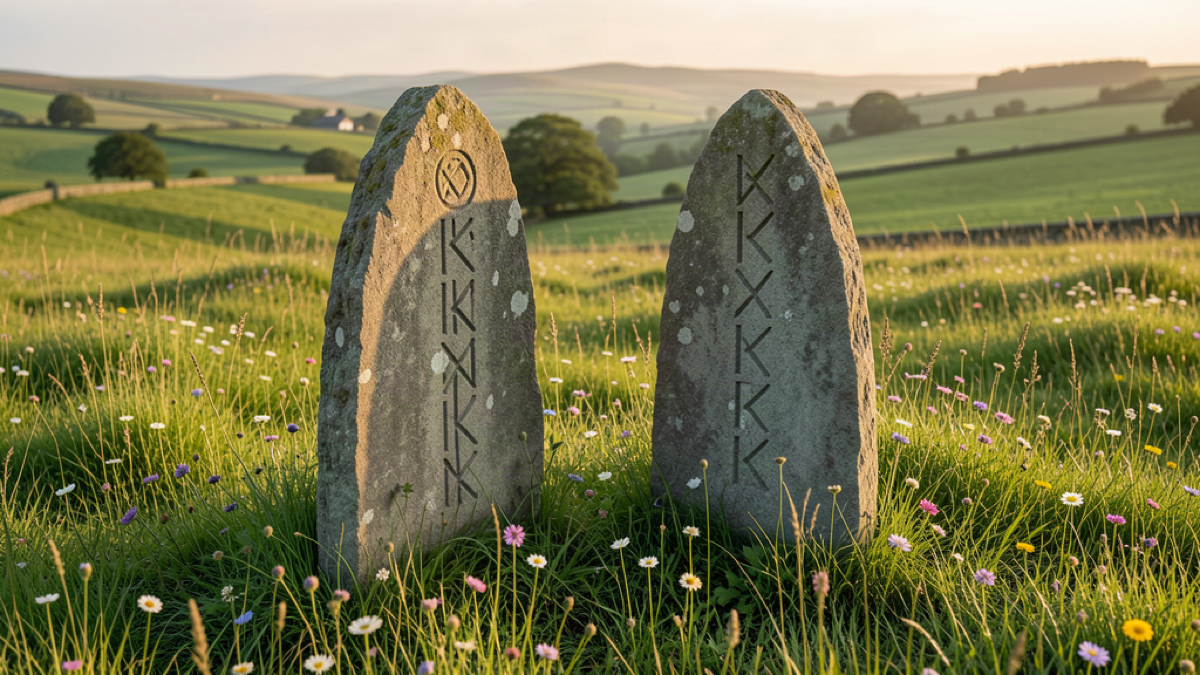
Ogham is a linear script used mainly between the fourth and seventh centuries, most famously on upright stone pillars scattered across Ireland, Scotland, Wales and the Isle of Man. The system has twenty distinct letters, called feda, plus a group of five supplementary signs. The core twenty are organised into four groups, or aicme, each sharing a visual pattern. Every letter was named after a tree, so the script is often called the Celtic tree alphabet.
The letters are formed using groups of straight strokes scored along a central line, which is usually the corner of the carved stone. A letter is built from between one and five strokes, and its meaning changes depending on whether those strokes sit above, below or across the central line. This simple design meant a skilled carver could write with little more than a chisel and a steady hand, which is exactly why so few tools were needed to create the monuments that survive today.
The Four Aicme and Their Twenty Letters
The core twenty letters divide into four families, each with its own stem-line rule. The first group, Beith-luis-nin, uses strokes to the right of the centre line, and this gives the alphabet its alternative name. The five letters of this first family are b, l, v, s and n, in that order. The second group, húatha, uses strokes to the left. The third, muine, uses diagonal lines. The fourth, ailm, uses strokes that cross the centre line, known as crossing vowels.
Although the names sound forbidding at first, learners usually find the pattern reassuring. Because every letter is just a count of strokes plus a direction, ogham is one of the easiest scripts in the world to memorise. In practical terms it works like a modern keyboard: each character is a fixed sequence of marks, and a reader decodes the sequence left to right, bottom to top, which is how most inscriptions on the edges of stones read.
How to Read a Real Ogham Inscription
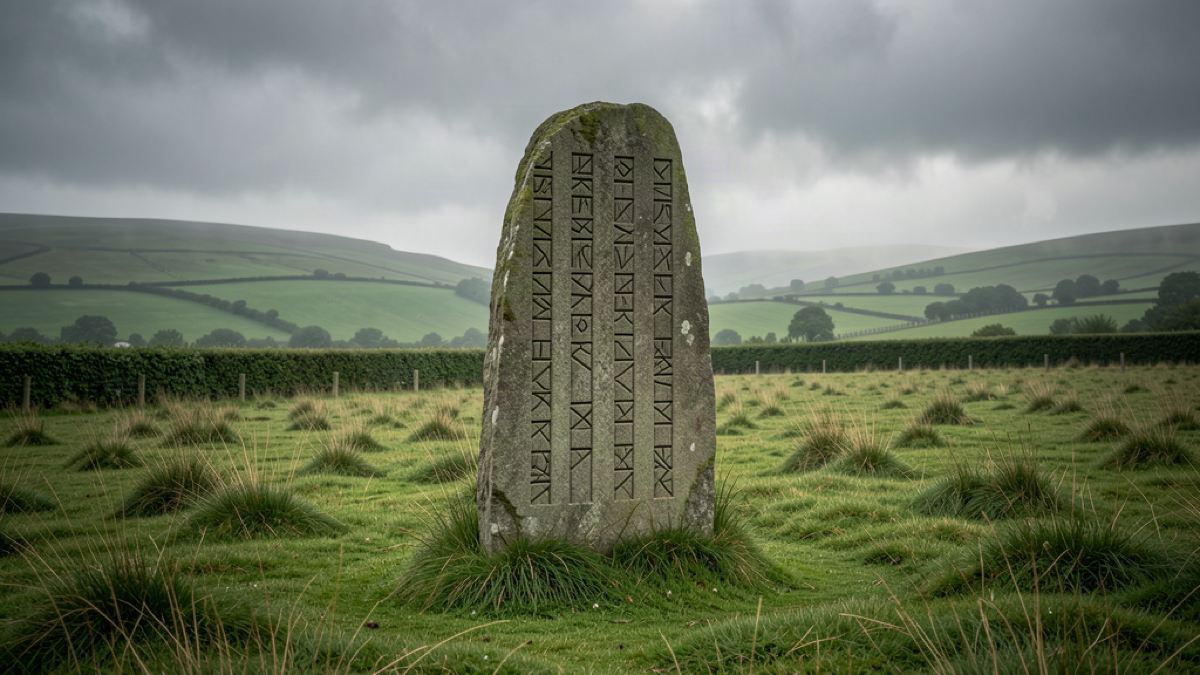
Almost all surviving ogham inscriptions are memorial stones, raised to name a dead person and often his father or clan. A typical example might read NETA-SEGAMONAS MAQI MUCOI, which translates roughly as “Neta-Segamonas, son of the tribe of”. The language recorded is an early form called Primitive Irish, spoken a thousand years before the Irish of the modern Gaeltacht.
Because you read from the bottom of the stone upward, the carved edge acts as the stem-line, and the strokes on either side are the letters. When the same inscription is printed in a book, the stem-line is drawn horizontally and the strokes go vertically, above and below. Getting comfortable with both orientations is the main hurdle. Once you recognise that the same letter can be cut above, below or across the line, the whole system falls into place.
The earliest inscriptions are purely memorial, but later ones sometimes carry a little more information, and a small number are even bilingual, paired with a Latin version that gives historians a translation key. Scholars use these bilingual stones to confirm readings, and they show that ogham carvers were literate in Latin as well.
Ogham Names, Trees and Meaning
Every ogham letter carries the name of a tree or shrub, and there is a genuine vocabulary hiding inside the alphabet. The first letter is beith, the birch; luis is the rowan; fearn is the alder; sail is the willow; and nion is the ash. The vowels take their names from more unusual plants: ailm is the elm, onn the gorse, úr the heather, eadhadh the aspen and idhadh the yew. The brighter and fussier letters of the fourth group, known as the forfeda, were added later and include names resembling gooseberries and bees.
These arboreal names fed a medieval tradition that turned ogham into a mystical tree alphabet, used in works like the Bríatharogaim, where each letter is also linked to a set of cryptic phrases. For a learner, the tree names are a gift: they turn a string of abstract marks into a memorable story. You are not just memorising a symbol for b, you are learning that the same letter is beith, the birch that grew beside every settlement in early Ireland.
The Distribution of Ogham Stones Across the Celtic World
Ogham is often described as Irish, and the greatest concentration of stones is indeed in the south-west of Ireland, in counties Kerry, Cork and Waterford. But the script travelled with Gaelic speakers. Some of the best-known ogham stones stand in Wales, where they sometimes appear beside Latin inscriptions that use the same stones. In Scotland, a much smaller but real group survives, and the Isle of Man preserves a few fine examples of its own.
This migration matters for language learners because it shows that Gaelic speakers were connected across the whole Irish Sea region more than a millennium ago. The ogham stones are physical proof that Scottish and Irish Gaelic share ancestors who wrote in the same script, long before the two modern languages drifted into the forms we know today. When you see a Scottish stone cut in the same alphabet as an Irish one, the shared root of the languages becomes far easier to grasp.
Why Ogham Still Matters to Modern Gaelic Learners
There are three practical reasons why an ogham detour is useful even if you never intend to carve a stone. The first is that ogham names appear constantly in place names and family names across the Gaelic world, and recognising them helps you decode signs, maps and surnames without a dictionary. The second is that the script gives you a vivid mental model of how the ancient ancestor of Irish and Scottish Gaelic sounded. The third is that ogham is simply a strong motivator: learning a script older than any surviving manuscript makes the whole project of studying a minority language feel connected to a deep and proud history.
Modern revivals have also taken ogham out of the museum. Artists carve ogham into jewellery, designers render Gaelic names in the old letters, and digital fonts now typeset the alphabet so you can type your own name in beith-luis-nin. For learners who like tangible goals, being able to write and read your own name in ogham is a satisfying early milestone that stays with you.
Ogham in the Digital Age: Scripts, Fonts and Apps
Far from being frozen, ogham is fully supported in modern computing. The Unicode standard includes an Ogham block, which means the letters can be typed, stored and displayed like any other alphabet. Fonts such as the free ogham designs released for public use let you render the script in browsers and documents, and several Gaelic learning apps even let you switch a vocabulary deck into ogham display as a novelty mode.
This digital support makes ogham one of the most accessible ancient scripts in the world. You do not need to visit a museum to see authentic letterforms; you can load a font, type your own Gaelic practice words, and check your reading against a chart in minutes. The contrast with other early European scripts could not be greater, and it means the old alphabet has found a genuinely modern second life.
A Quick Guide to the Main Forfeda
Beyond the core twenty, ogham uses a small supplementary set. The most often quoted is the group of five forfeda, added to represent sounds that the original system did not cover, including a broader range of vowels and a few consonants borrowed through contact with Latin. In practice, only eabhadh and its companions appear on the majority of surviving stones, and the rest are largely a feature of the manuscript tradition from the Middle Ages.
For the learner, the forfeda are a reminder that scripts evolve. Ogham did not fall from the sky fully formed; it developed, borrowed and extended for centuries, and later scribes expanded it again on parchment. Understanding that the alphabet mutated over time is a valuable lesson about language change in general, and it makes the study of ogham a small lesson in linguistics as well as history.
Conclusion
The ogham alphabet is the oldest written voice of the Gaelic languages, a compact set of twenty tree-named letters that survived on stone while the world around it changed. Reading ogham is not a relic-chasing hobby but a genuine tool for any serious learner of Scottish or Irish Gaelic. It strengthens your memory with its regular pattern, deepens your feel for place and family names, and connects you directly to the people who spoke the ancestor of the language you are studying today. Whether you memorise the four aicme in an afternoon or revisit the alphabet over months, ogham is one of the most rewarding side-quests in Gaelic learning.