
The Gaeltacht: Ireland’s Irish-Speaking Regions and Why They Matter
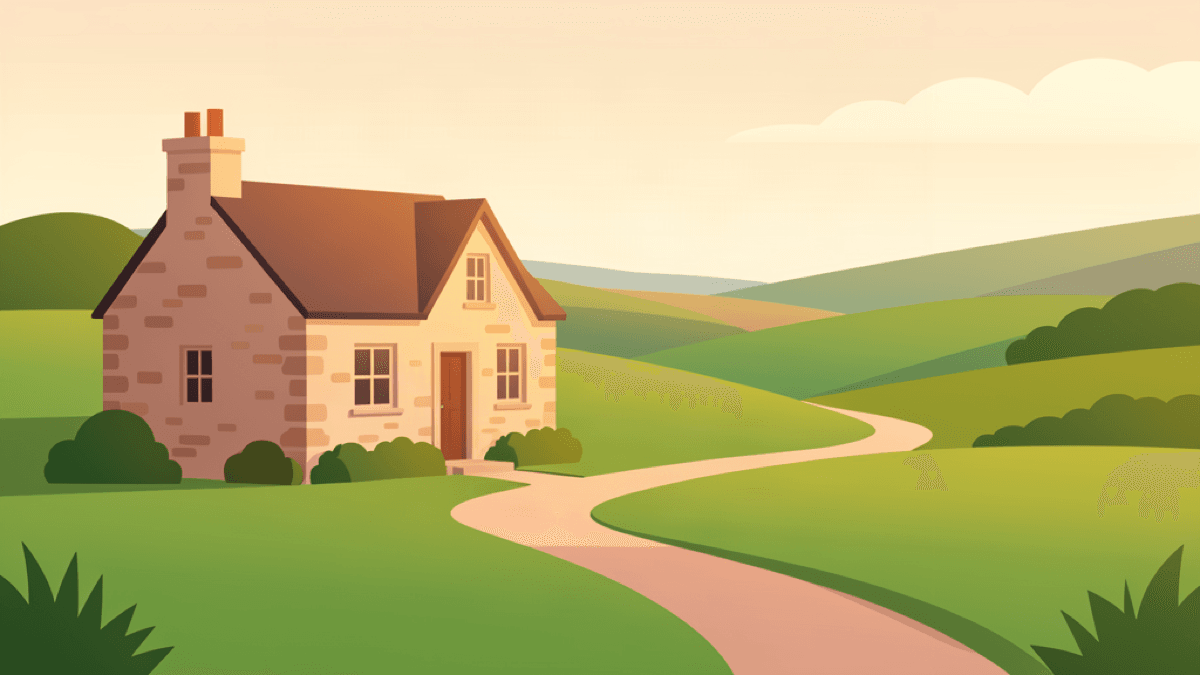
At the western edge of Ireland, in a scattering of coastal communities, the Irish language still lives as a first language of daily life. These regions are known collectively as the Gaeltacht, and they hold the last remaining communities in Europe where Irish is spoken natively and passed from one generation to the next. The Gaeltacht is not a museum and not a statistic; it is the emotional and practical heart of the Irish language, and its future shapes the future of Irish itself.
What exactly is the Gaeltacht
The Gaeltacht is the official name for the areas of Ireland where the Irish language is spoken as the everyday community language. The word “Gaeltacht” comes from Irish and simply means a Gaelic-speaking district. These regions are legally designated by the state, and the designation carries real weight in law, budgeting and language policy.
The Gaeltacht is not one continuous territory. It is a collection of scattered areas, mostly along the west coast, where the language survived the great decline of the nineteenth and twentieth centuries. The main Gaeltacht regions include parts of County Donegal in the far north, the Conamara district of Galway in the west, the peninsula of Corca Duibhne in County Kerry, the Mùscraí area of County Cork, parts of County Mayo, a Gaeltacht village in County Waterford, and a small community in County Meath. Each of these regions has its own accent, vocabulary and traditions, so the Gaeltacht is better understood as a family of communities than as a single place.
For anyone learning Irish, the Gaeltacht is also the place where the language makes sense as a living system. Standard courses teach Irish carefully and slowly, but in a Gaeltacht community you hear the language used naturally for gossip, shopping, farming and laughter. That contrast between the classroom and the hearth is at the heart of why the Gaeltacht matters so much to the future of Irish. If you are just beginning your study, a beginner’s guide to Irish explains the foundations you would bring with you on a visit.
How the Gaeltacht came to be
The Gaeltacht is the surviving remnant of a much larger territory. Before the massive social upheaval of the nineteenth century, Irish was spoken over most of the island. The Great Famine of the late 1840s and the emigration that followed devastated the Irish-speaking rural population, and the shift to English accelerated so rapidly that by the end of the century Irish survived as a mother tongue only in the poorest, most remote areas of the west.
Those areas became the Gaeltacht. The very isolation that made their communities poor also protected their language, because English influence spread more slowly to remote coastal districts. When the Irish Free State was founded in 1922 and Irish was recognised as an official language, the state formally identified these surviving Irish-speaking districts and gave them the legal status and support that the name Gaeltacht implies today.
The story since then has been a constant struggle against erosion. Emigration has continuously drawn young people out of Gaeltacht communities toward English-speaking cities, and the economic challenges of rural life have pushed families toward English as the language of work. Despite official status and state support, the Gaeltacht has steadily contracted over the past century. The question that hangs over the whole language is whether enough can be done, and done in time, to reverse that contraction.
Life inside a Gaeltacht community
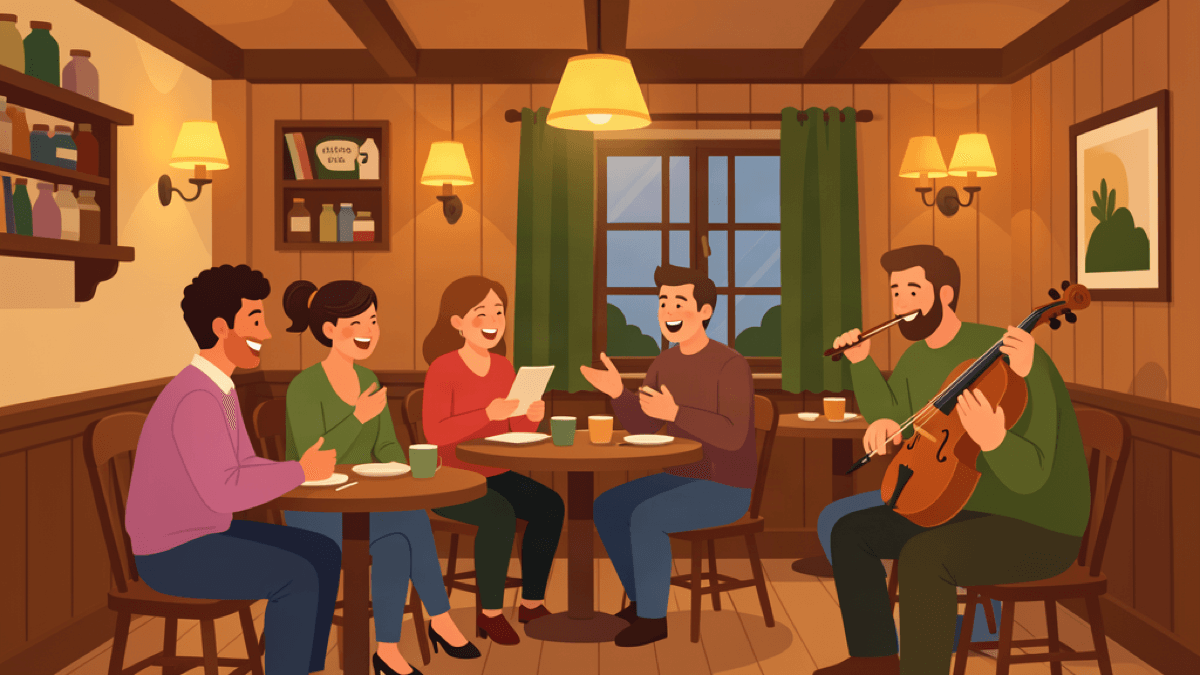
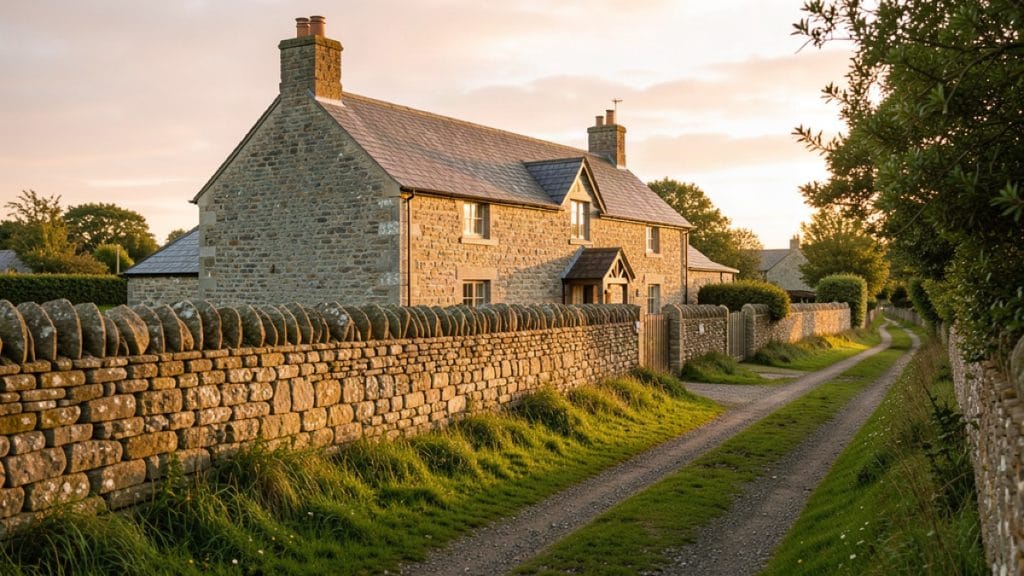
To walk through a strong Gaeltacht village is to hear a different Ireland. Irish is the default language of the shop, the pub, the playground and the family kitchen. Children grow up learning Irish at home and at school, and for many it is their first language, developed before they encounter English fully.
The community institutions of the Gaeltacht are the engine of its survival. State support funds Irish-language services, from health and education to planning and legal affairs. Local schools teach through Irish, and there is a strong tradition of Irish-language cultural activity, including music, song and storytelling that keeps the spoken tradition alive across generations. The Gaeltacht has produced some of the most important Irish-language writers, poets and musicians of the modern era, because it is the one place in the world where Irish remains creative, flexible and in daily use.
For many learners, the Gaeltacht is also the goal of their linguistic journey. Immersion courses in the Gaeltacht are a time-honoured way to make rapid progress, because a few weeks of hearing and speaking Irish all day compresses language growth that can take months in a classroom far away. The principle is the same one that works for any language: constant exposure forces the brain to switch from translating to thinking. The immersion approach that works in a Gaeltacht visit can be partially replicated at home with discipline, but nothing quite matches the real setting.
The institutions that protect the Gaeltacht
The survival of the Gaeltacht depends on a web of official institutions, many of which have no counterpart outside Ireland. A dedicated state agency for the Gaeltacht oversees development and language supports, coordinating economic investment with language maintenance so that communities can thrive without abandoning Irish. The Gaeltacht Act sets out how the regions are defined and requires that planning, services and public administration respect and promote the language.
Irish-language broadcasting plays a central role. A dedicated radio service broadcasts entirely in Irish, and the Irish-language television channel provides a steady stream of news, drama, documentary and children’s programming. For Gaeltacht families, and for learners everywhere, this media ecosystem makes Irish a normal presence rather than a school subject. The practical effect is that children grow up hearing Irish used for every kind of content, which reinforces the idea that the language belongs to the modern world.
Education is equally vital. Gaelscoileanna, the Irish-medium schools that operate across the country, are funded partly to serve Gaeltacht communities and partly to give urban children a chance to study through Irish. In many areas these schools are so popular that they have waiting lists, a remarkable sign of the language’s renewed appeal even in regions where English dominates daily life.
The challenges the Gaeltacht still faces
Despite its official status, the Gaeltacht remains fragile. The most acute problem is demographic: many Gaeltacht communities are ageing, and young people continue to leave for education and jobs in larger towns and cities. A community’s language cannot survive on goodwill alone; it needs enough young, native speakers living and working in the area to sustain the everyday speech that defines the Gaeltacht.
There is also the quieter pressure of language dominance. English surrounds every Gaeltacht community, through media, transport, commerce and online life. Maintaining Irish as the first choice of two people in a society saturated with English requires constant, conscious effort from everyone in the community. Economists and linguists describe this as the central challenge of every minority language in the modern world, and the Gaeltacht is a frontline case but far from alone. The same dynamics that shape Irish communities in Meath also shape minority languages across Europe, which is one reason the Gaeltacht attracts international attention.
Why the Gaeltacht matters for learners
For anyone learning Irish, the Gaeltacht has a practical and an emotional significance. Practically, it is the benchmark. The goal of most learners is not to match a dictionary but to feel at home in real Irish conversation, and the Gaeltacht is where that kind of Irish lives. Learners who eventually want to use the language with confidence will find that time spent listening to native speakers, whether in person or through Irish-language media, is the fastest way to train their ear.
Emotionally, the Gaeltacht gives the language a home. Gaelic learning can feel solitary for a student surrounded by English speakers, but knowing that real communities use Irish every day reframes the language as something living rather than academic. That sense of a living community sustains motivation far better than any app alone. For the deep cultural side of the language, the traditions preserved in these communities connect directly to the wider Celtic culture that learners often fall in love with.
For learners who want structured practice alongside their exposure to Irish, a focused flashcard app is a reliable companion for building the core vocabulary you will meet in any Gaeltacht conversation.
Conclusion
The Gaeltacht is the beating heart of the Irish language. These small, scattered communities carry native Irish into the future, sustaining the everyday speech, creativity and culture that no classroom can fully teach. They face real and continuing pressure, from emigration and the dominance of English, but they are also protected by committed institutions, a thriving media ecosystem and a new generation of learners.
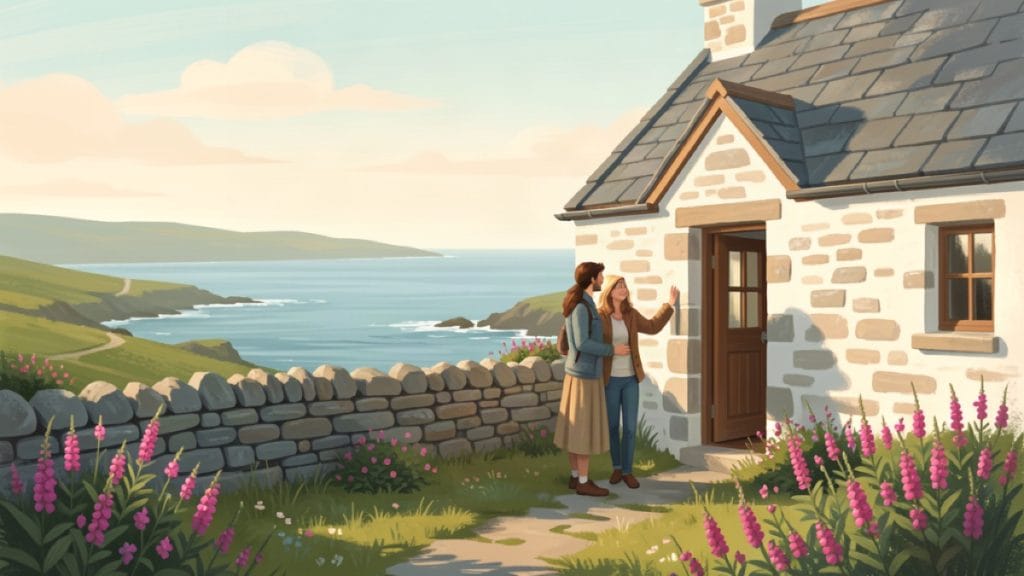
For the language learner, the Gaeltacht is both a destination and an inspiration. It is the place where Irish is simply life, and it is living proof that the language is not a thing of the past. Every learner who picks up Irish is connected to these communities, and every conversation held in a Gaeltacht kitchen is a small act of survival for a language that refuses to fade.


1 Comment
Comments are closed.
[…] are planning your wider toolkit, the Irish Gaelic app comparison is a good starting point, and the beginner blog guidance on the Gaeltacht regions explains why hearing authentic community speech matters so much. To really train your ear, pairing […]