Essential Irish Travel Phrases: How to Speak a Little Gaeilge in Ireland
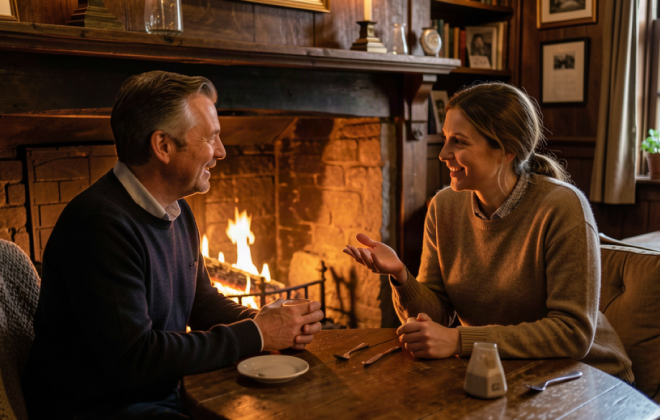
Walking into a small pub in Connemara, ordering a coffee in Galway city, or asking for directions on a boreen in County Kerry are moments where a few words of Irish go a very long way. English is spoken everywhere in Ireland, so a traveller can get by without a single word of Gaeilge. But the Irish people warm visibly to visitors who try. A well-placed “Go raibh maith agat” (thank you) or “Dia dhuit” (hello) can turn a transactional exchange into a genuine conversation, and it is one of the simplest ways travel rewards preparation.
The aim of a travel phrasebook is not fluency. It is confidence. This guide offers a practical collection of the Irish phrases a visitor actually needs, grouped by the situations they will meet in real life, along with simple pronunciation guides that work even for a total beginner. It is written to be read before a trip and revisited from a phone when the moment arrives. For a broader foundation, the complete beginner’s route into the Irish language is the natural next step once the essential phrases feel comfortable.
Why even a handful of Irish phrases helps
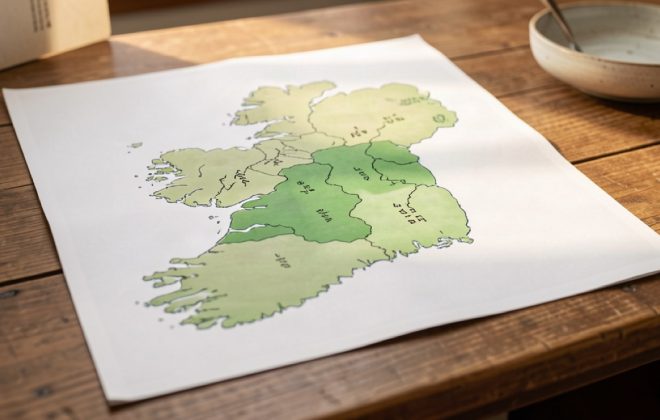
Ireland is officially bilingual, and although daily spoken use is concentrated in the Gaeltacht regions along the west coast, Irish is woven throughout public life. Road signs, train announcements, radio and television all carry Irish. Even a small store of phrases lets a visitor read those signs with fresh eyes and catch the cultural texture that a purely English-speaking itinerary misses.
There is a deeper benefit. The Irish language carries an enormous emotional weight for many Irish people. It is the language of song, of history, and of the island’s identity. A visitor who makes the small effort to greet someone in Gaeilge is signalling respect and interest, and the response is almost always warm. In many cases a simple “hello, how are you?” spoken with an imperfect accent opens a door that a perfect English conversation never would.
Greetings and polite basics
The essential greetings form the backbone of any interaction. These are short, used constantly, and easy to learn. They are the highest-value phrases on the whole list.
- “Dia dhuit” (JEE-ah gwitch): hello, literally “God to you”
- “Dia is Muire dhuit” (JEE-ah iss MWI-ruh gwitch): the reply, literally “God and Mary to you”, used by the person who is greeted second
- “Conas atá tú?” (KUN-us ah-TAW too): how are you?
- “Tá mé go maith” (TAW may guh MAH): I am well
- “Slán” (slawn): goodbye
- “Slán agat” (slawn AH-gut): goodbye, said to the person staying
- “Slán leat” (slawn lat): goodbye, said to the person going
Politeness carries the rest of the load. “Go raibh maith agat” (guh ROH mah AH-gut) means thank you, and the reply “tá fáilte romhat” (TAW FAWL-tchuh ROW-ut) means “you are welcome”. “Le do thoil” (leh duh HULL) is the standard way to say “please” in Munster, while “mas é do thoil é” is the Connacht and Ulster form. Around these small words a visitor can construct a perfectly courteous interaction. The broader field of polite phrases for please, thank you and sorry expands this foundation well beyond the essentials.
Ordering food and drink
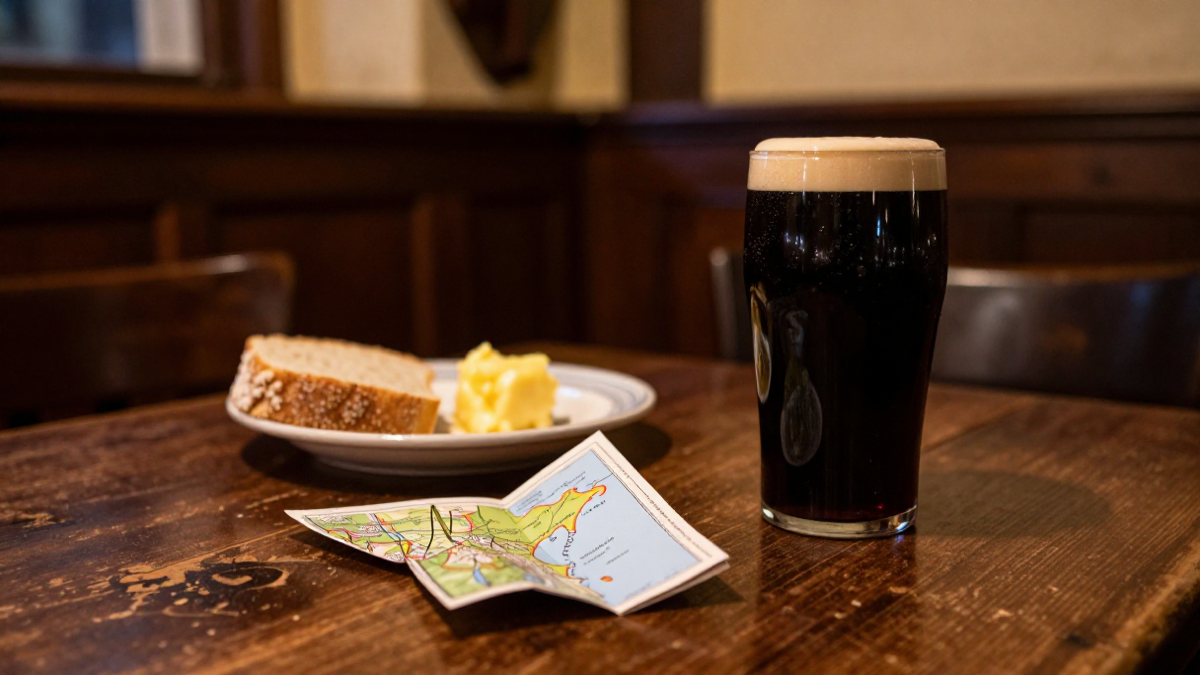
Food and drink are where most travellers use their Irish phrases most often, and the pub is the cultural heart of Ireland. Knowing how to ask for a coffee, a pint, or the bill transforms the experience.
- “Caife, le do thoil” (KA-fe, leh duh HULL): a coffee, please
- “Pionta Guinness, le do thoil” (PYUN-tuh Guinness, leh duh HULL): a pint of Guinness, please
- “An féidir liom an biachlár a fheiceáil?” (an FAY-dir lom on BEE-akhlar a eck-AWL): can I see the menu?
- “Tá an-tóir ar an mbialann seo” (TAW an-TORE er on MEE-uh-lun shuh): this restaurant is very popular
- “An bhfuil tú ag freastal ar thae?” (an WILL too eg FRAS-tul er hay): do you serve tea?
- “An bhféadfainn an scéal fíoruisce?” (an VAY-deen on skayl FEE-ru-ish-ke): could I have a glass of water?
The phrase “an bhfuil” (an will) is the standard way to ask “is there?” in Irish, and it appears at the head of dozens of useful questions, from “an bhfuil seomra folctha ann?” (is there a bathroom?) to “an bhfuil Wi-Fi ann?” (is there Wi-Fi?). Learners who recognise this opener unlock an instant catalogue of questions without learning each one separately. The pattern is explained in detail in the guide to prepositions such as ag, le and ar, which shows how Irish builds meaning from small building blocks.
Asking for directions
Getting lost is part of the charm of a rural Irish trip, but a few phrases let a visitor find the way back with dignity. Directions in Ireland usually mention landmarks, so expect to hear pub, church, bridge, hill or turn rather than street names.
- “Cá bhfuil an bealach?” (kaw will on byAL-okh): where is the way?
- “Cá bhfuil an stáisiún?” (kaw WILL on STAW-shun): where is the station?
- “Cas ar chlé” (KOS er khlay): turn left
- “Cas ar dheis” (KOS er yesh): turn right
- “Díreach ar aghaidh” (JEE-rakh er EYE): straight ahead
- “An bhfuil sé i bhfad ar shiúl?” (an will shay i VAD er hool): is it far away?
- “Tá brón orm, níl a fhios agam” (TAW BROWN ur-um, neel us AH-gum): I am sorry, I do not know
The question “cá bhfuil?” (where is?) is the essential location question, and it mirrors the pattern of “an bhfuil” in the previous section. Together they cover a remarkable amount of ground. Travelers who want the fuller picture of these question forms will find them laid out in the guide to Irish place names and what they mean, which also turns every sign the visitor passes into a small language lesson.
Numbers, time and shopping
Numbers crop up the moment a price, a time or a quantity is involved. Irish numbers follow a logical structure once the foundation is known, and the practical demands of a trip rarely go beyond the lower teens.
- “a haon” (ah HAYN): one
- “a dó” (ah DOH): two
- “a trí” (ah TREE): three
- “a ceathair” (ah KYAH-her): four
- “a cúig” (ah KOO-ig): five
- “cé mhéad?” (kay VADE): how much?
- “Cé mhéad atá air?” (kay VADE ah-TAW er): how much does it cost?
Irish has a special counting system for people and a distinct counting pattern for money and time, which fellow learners often find surprising. The full system, including how to count well beyond the basics, is covered in the guide to Irish numbers from 1 to 1000 and beyond. For a trip, though, “cé mhéad” (how much?) plus the numbers to ten covers most purchases, from a newspaper to a bottle of water at a village shop.
Emergencies and getting help
No one plans for trouble, but a phrasebook that covers basic needs provides real peace of mind. If something goes wrong, the ability to ask for help in the local language, however haltingly, is valuable.
- “Cabhair!” (KOW-ir): help!
- “Glaoigh ar na póilíní, le do thoil” (GLWEE er nuh PO-lee-nee, leh duh HULL): call the police, please
- “Tá mé tinn” (TAW may cheen): I am sick
- “An bhfuil ospidéal in aice láimhe ann?” (an will OS-ih-dayl in IKE-eh LAW-iv an): is there a hospital nearby?
- “Tá an dochtúir uaim” (TAW on DOKH-toor oo-im): I need a doctor
- “An bhfuil cead agam an fón a úsáid?” (an will KOD AH-gum on fone a oo-SAWD): may I use the phone?
Numbers for emergencies, directions to the nearest chemist or clinic, and the phrase “ar dtús, an bhfuil tú ceart go leor?” (are you all right?) round out the safety net. Travelers who carry a small written card with these key phrases and their translations have a quiet insurance policy should stress make pronunciation slip away.
Understanding Irish pronunciation on the road
The pronunciation guides above use approximations that a beginner can say immediately, but a little more understanding makes the phrases land far better. Irish spelling looks intimidating, yet it is remarkably consistent once a few rules are known. The “bh” in “bhfuil” is pronounced like a “v” or “w”; “mh” is similar; “th” is often a soft “h” or silent; and “ch” is the guttural sound at the back of the throat familiar from “loch”.
The letter combinations that trip up most travellers are the consonant clusters that appear at the start of words, such as “bhf” in “bhfuil”, which is keenly pronounced as a “w”. These are examples of eclipsis, a mutation in which the first sound of a word is changed by the grammatical context. The full mechanics of Irish mutations, lenition and eclipsis are a grammar topic, but on the road the practical tip is simple: relax, say the phrase as a whole, and let the rhythm carry the sounds. Native Irish speakers are universally patient with visitors, because the mere attempt is warmly appreciated.
Learning the survival core
The most effective way to prepare is to focus on a small survival core rather than a long list. Aim for about twenty to thirty phrases across greetings, thanks, food, directions and numbers, learned well enough to say without thinking. Everything beyond that is a bonus that can be looked up on demand.
Spaced repetition is the fastest route to locking these phrases in. A simple deck of the survival core, practised for a few minutes each day in the weeks before a trip, embeds the phrases far more securely than cramming them during a flight. The method for building a personal Irish flashcard set applies just as well to phrases as to single words, and it turns a few weeks of preparation into a lasting conversational asset.
Making the most of your effort
A little Irish transforms a trip. Order a coffee with “caife, le do thoil”, thank the barman with “Go raibh maith agat”, and greet a shopkeeper with “Dia dhuit”, and the small everyday exchanges of a journey become warmer, richer and more memorable. The phrases in this guide cover the situations a traveller actually faces, from the pub in Connemara to a village shop in Kerry, and they are chosen to be useful from the very first day.
Start practising the survival core now, a few minutes a day, and let the language grow along the way. For travelers who fall in love with the sound of Irish on the road, the Gaeltacht regions where Irish is spoken every day offer the most immersive possible next step, and a trip can easily become the beginning of a lifelong relationship with the language rather than a one-off phrasebook exercise.