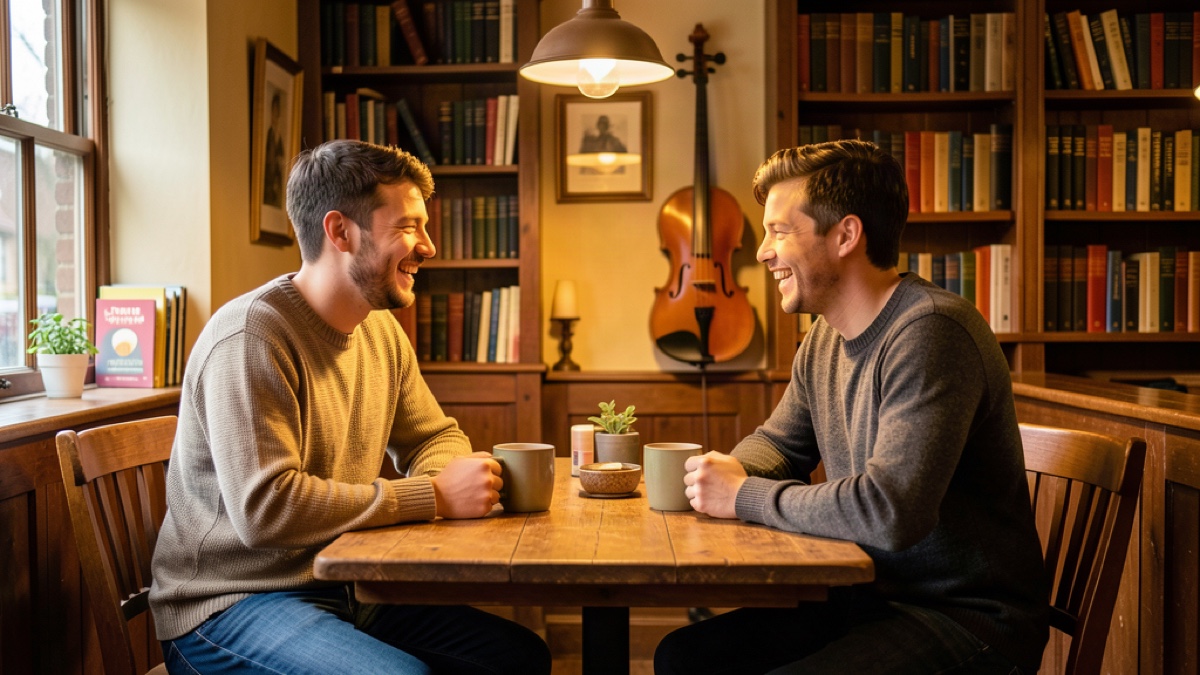
Modern Irish Slang: How Young Speakers Are Shaping Gaeilge Today
Irish is often described as a language of the past, a relic preserved in poetry and textbooks. But walk past a Gaelscoil (an Irish-medium primary school) at three o’clock, or open the Irish-language side of TikTok, and that description falls apart. A whole generation of young Irish people is speaking Gaeilge every day, and like every living language spoken by young people, it has developed its own modern slang, its own digital habits, and its own unmistakable energy. This article explores how today’s young speakers are reshaping Irish, what the new slang looks like, and what it all means for learners who want to sound current rather than like a textbook from 1960.
The revival that the headline writers missed
The common story is that Irish is dying. The more accurate story is more interesting. Ireland has produced a generation of fluent young speakers that the country has never really seen before, and it happened through education. Since the 1970s, the Gaelscoileanna movement has built a network of Irish-medium schools across the whole island, no longer confined to the Irish-speaking regions of the Gaeltacht. Children who grow up outside those traditional heartlands now learn and live daily life through Irish from the age of four or five.
These young people, sometimes called the Gaelscoil generation, did not inherit Irish from their grandparents. They learned it the way children learn any language, by living in it. Because they acquired Irish young and naturally, they are the first large cohort in decades to treat it not as a school subject to be studied but as an ordinary language to be lived, joked in, and made their own. And the moment a language becomes ordinary and personal, slang follows.
A second, quieter force is the Gaeltacht itself, which continues to produce communities where Irish is the first language of the home. Between the traditional Gaeltacht regions, the urban Gaelscoil cohort, and the online world that connects them, Irish now has a young, confident, digitally-native speech community with enough mass to evolve on its own terms.
Where to hear living Irish: the new gathering places
If you want to hear modern Irish as it is actually spoken, the radio and the classroom are only part of the picture. The real action today is on screens. The Irish-language broadcaster TG4 has spent decades building an audience, and its output now includes drama, comedy, sport, and a strong online presence that younger viewers actually watch. Irish-language influencers, musicians, and comedians have found homes on YouTube, TikTok, and Instagram, and a lively Irish-language meme culture has grown up around common phrases and the gentle absurdities of everyday Gaeltacht life.
This matters for the learner because the register is different from what you will meet in a textbook. Textbook Irish is slow, careful, and formally correct. The Irish you hear in a TG4 comedy sketch or a young influencer’s video is fast, clipped, and full of the informal shortcuts that natural speech always develops. Meeting both is essential to sounding like a real speaker rather than a reading exercise.
Core greetings and everyday slang worth learning
Some of the most useful modern Irish is simply the everyday language young speakers use among themselves. Learning these gives you immediate credibility and, more importantly, the ability to follow a real conversation.
Cén scéal? The greeting, meaning literally “what is the story?,” is the Irish equivalent of the friendly “how’s it going?” that so many Irish people also say in English. You answer not with a news bulletin but with a quick reply such as “go maith” (well) or “go hiontach” (wonderful), and the exchange does the work of a handshake in words. It is one of the first phrases a visitor to Irish-speaking company should have ready.
Sláinte. The classic toast, meaning “health,” is used when raising a glass, and it travels everywhere Irish is spoken. Its ubiquity makes it one of the few words of Irish that almost everyone, even non-speakers, recognises.
Craic. This short word has a complicated history and a simple modern meaning: fun, good times, the lively atmosphere of a good gathering. “That’s great craic” and its Irish equivalent “bhí an-chraic ann” (there was great craic) capture the social heart of Irish conversation. Understanding craic is understanding how Irish people socialise.
Ar fheabhas. Meaning “excellent” or “brilliant,” this is everyday positive slang, the sort of thing you say when a friend tells you a piece of good news or a plan sounds great. Its close cousin “iontach” (wonderful) plays the same role.
Mo ghrá / grá. “Grá” is “love,” and all the affectionate constructions build on it: “mo ghrá thú” expresses deep fondness, and terms of endearment cluster around it. Any learner who wants warm, personal Irish will meet this root constantly.
These are not obscure dialect words; they are the connective tissue of real conversation. Nail them, and you move from textbook correctness toward the ease of everyday speech.
Béarlachas and the honest reality of code-switching
Now for the honest part. Living Irish, like every language in contact with a dominant neighbour, borrows. Irish speakers bounce between Irish and English constantly, and the Irish they speak is full of English words, English-influenced constructions, and what purists sometimes mock as “Béarlachas” (the destructive habit of Anglicising the language). For a learner, understanding this is more useful than judging it.
The dictionary version of Irish and the spoken version differ most in this area. In formal writing, Irish has sturdy native words for complex concepts. In casual speech, a young speaker will often drop in the English word without a pause, the way multilingual people everywhere borrow the most convenient term mid-sentence. This is not laziness; it is the normal mechanics of a bilingual brain, and every living minority language weaves its dominant neighbour into its fabric.
The practical lesson for learners is about register. If you want to be understood and taken seriously in a formal, written, or academic context, the standard dictionary Irish is your friend, and a valued one. If you want to chat naturally with young speakers in a pub or online, expect code-switching and be ready to meet it with the same relaxed attitude. Trying to stamp out every English word in your spoken Irish will likely make you sound stiff rather than fluent, so treat Béarlachas with a learner’s awareness: know it, hear it, and use it lightly where it fits.
How informal Irish differs from the textbook
Spoken, informal Irish diverges from written Irish in several predictable ways, and knowing these patterns makes you not only a better listener but a more natural speaker.
The speech is faster and more clipped. Particles and small words get shortened or dropped at speed, and unstressed syllables compress the way they do in every language spoken quickly. You cannot learn this from the page; you have to hear it across many examples until your ear accepts the compressed shapes as the normal sound of the language.
Greetings are formulaic and quick. Real speakers trade set phrases back and forth (“cén scéal?” and its replies) that are rarely taken literally. Learning these as single chunks, rather than trying to piece them together from grammar rules, is the efficient path.
Directness and warmth compete with formality. Irish has a rich register system, and the spoken form is far more direct and warmer than the formal written register. Learning to soften when you should and be direct when you should is a real skill, and it comes from exposure to natural examples rather than from a grammar book.
Complete sentences are optional. In fast conversation, fragmentary replies, gestures, and shared context carry half the meaning, exactly as they do in colloquial English. Following this takes practice, but it is part of what “fluent” really means.
What slang means for you as a learner
If your goal is to speak Irish with living people, these modern patterns are not a distraction from the “real” language; they are a large part of the real language today. The textbook gives you the skeleton, the grammar and the standard vocabulary. The young community gives you the skin: the speed, the shortcuts, the slang, and the confidence to hold a real conversation. You want both.
A practical way to build your ear for modern Irish is to deliberately include informal sources in your study diet. Watch a TG4 comedy or chat show, follow an Irish-language influencer or two, and let the fast, casual, code-switching Irish wash over you regularly. Over time, your ear calibrates to it, and your own speech becomes more natural by imitation, the same way you learned your first language.
Because register matters, remain switch-aware. Know when the informal, slang-heavy register is appropriate, and know when it is not. In job interviews, formal writing, and serious academic or professional settings, the standard register is still the right tool, and being able to move between informal and formal Irish is exactly the flexibility that marks an advanced speaker.
The future of the language in young hands
What does all of this mean for the future of Irish? It is hard to call a language dying when a new generation is actively making it cool, claiming it online, and passing it to their own children. The rise of the Gaelscoil generation, the continuing vitality of the Gaeltacht, and the explosion of Irish-language digital culture all point in one direction: a language consolidating its position as a living, dynamic part of modern Irish identity.
Slang is the visible sign of that vitality. A language that is only preserved, studied, and mourned does not develop new slang; a language that is lived does. The fact that young people are creating, borrowing, and playing with informal Irish is, in a very real way, the best possible news for its survival.
For you as a learner, this is an invitation to join a living conversation rather than admire a museum piece. Learn the standard forms until they are automatic, then let the modern, informal, youthful Irish in. Say “sláinte” over a glass, ask “cén scéal?” before you get down to business, and let the language move at the speed your new friends speak it. That is what it means to learn Irish in the twenty-first century, and it is an enormously more rewarding goal than memorising a perfect textbook sentence you will never say out loud.
Reviewed for accuracy and updated regularly.
Ready to start building your Irish? Download FlashLearn for iOS or open the free web app in your browser and begin today.