The Gàidhealtachd: Scotland’s Gaelic-Speaking Regions
In Scotland, the word Gàidhealtachd describes the regions where the Gaelic language has historically been the everyday tongue. It is the Scottish answer to the Irish Gaeltacht, and it carries a complex history of geography, identity, and revival. For anyone learning Scottish Gaelic, understanding the Gàidhealtachd is more than background colour: it explains where the language is still heard today, why some areas remain strongholds, and where a learner could find immersion. This guide maps the modern Gàidhealtachd, traces how it shrank, and looks at the policies and people now working to bring Gaelic back to more of Scotland.
What the Gàidhealtachd Actually Means
The term Gàidhealtachd comes from Gàidheal, the word for a Gael, combined with a suffix meaning a territory or condition. In its widest historical sense it once covered most of the Highlands and all of the Hebrides, the region where Gaelic was the first language of the majority. Today the word is used loosely to refer to anywhere that Gaelic retains a meaningful community presence, which is a much smaller area than the maps of three centuries ago.
It is important to distinguish the Gàidhealtachd from the Gaeltacht. The Gaeltacht is a set of officially designated Irish-speaking districts in Ireland that receive specific state recognition and supports. In Scotland, the Gàidhealtachd has no single official boundary in the same sense, although parts of it are recognised in policy and in the mapping done by agencies such as Bòrd na Gàidhlig. The closest Scottish comparison is with Ireland’s Gaeltacht, which is why the two regions are often discussed together by language planners.
The Core Strongholds of Today
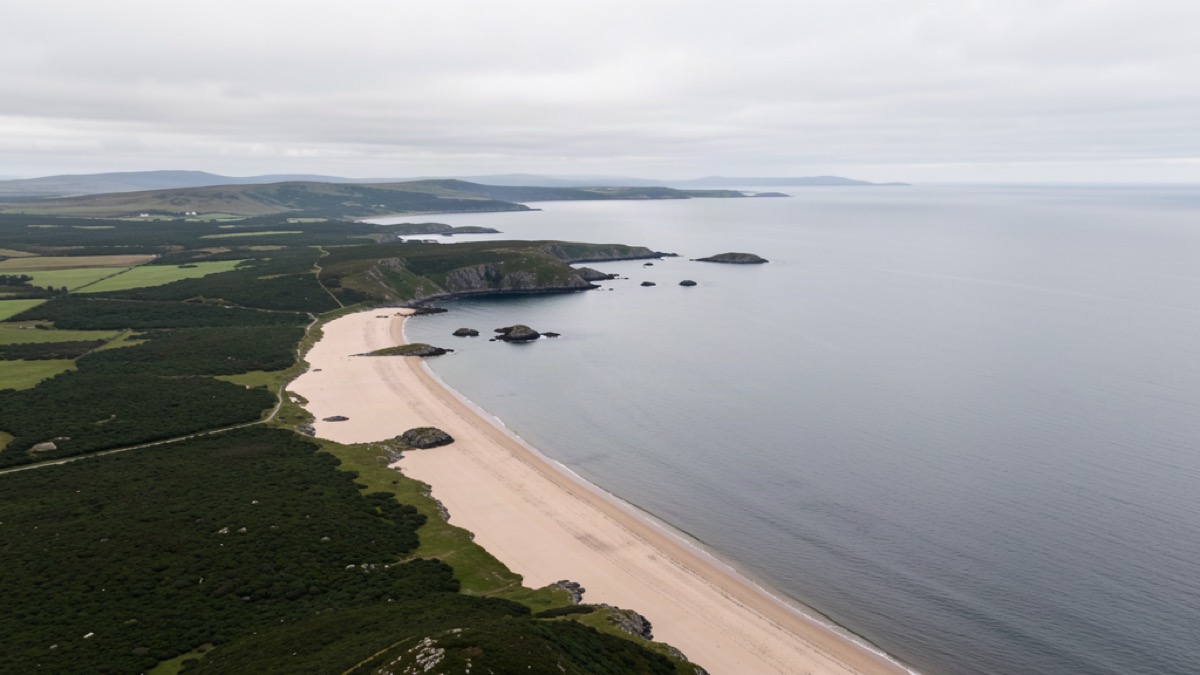
The modern Gaelic belt runs along the Atlantic fringe, and its heart is the Outer Hebrides, also called the Western Isles: a chain of islands including Lewis, Harris, North and South Uist, Barra, and Benbecula. This is the one area where Gaelic still appears as a majority everyday language, and it is where a visitor is most likely to hear children playing in Gaelic, adults switching into it at a shop, and radio in the language on a kitchen radio.
Around the Outer Hebrides, several other islands and coastal districts sustain notable Gaelic communities:
- The Isle of Skye, whose northern and eastern areas support active Gaelic households and a strong cultural scene built around people like Sorley MacLean and the modern Gaelic arts at Sabhal Mòr Ostaig.
- Tiree and Colonsay, small islands with a high concentration of Gaelic speakers relative to their populations.
- Islay and Mull, islands with strong Gaelic communities, festivals, and the presence of Gaelic-medium schooling.
- Mainland pockets such as the Lochalsh and Sutherland coastal areas, and parts of the north Highlands, where Gaelic communities survive alongside English.
It is worth remembering that the majority of Gaelic speakers, around half, today live outside the traditional Gàidhealtachd, in cities such as Glasgow and Edinburgh. The Glasgow Gaelic scene, with its Gaelic-medium school, its cultural centre at the An Lòchran, and its annual festivals, is one of the most dynamic in Scotland, and it shows that the language has moved with its speakers as well as remaining in its old heartland.
How the Gàidhealtachd Shrank
The Gàidhealtachd once extended far past the western edge of the country. The reasons for its retreat are layered, and they explain a great deal about the attitudes Gaelic speakers carried into the twentieth century.
The Statutes of Iona in 1609 marked an early official effort to extend English and Protestant education over the Gaelic-speaking islands, an attempt to bring the chieftains of the Hebrides under a single cultural and religious rule. The process accelerated with the dramatic social change of the eighteenth and nineteenth centuries.
The Highland Clearances, the large-scale eviction of tenants from the inland glens and islands to make way for sheep and the wider commercial economy, scattered Gaelic communities and broke up the places where the language was strongest. In the hundred years after the mid eighteenth century, hundreds of thousands of Gaels were displaced, many leaving for the cities, for the Lowlands, and above all for North America. This diaspora is one reason Gaelic is still spoken in Nova Scotia and in the Cape Breton Island region that so many learners discover today.
Education compounded the damage. For generations, the state school system punished children for speaking Gaelic, a policy sometimes remembered as the “belt” being used against the language. Speaking Gaelic at home was not the route to economic security, and parents increasingly chose English for their children as the language of jobs, school, and progress. By the twentieth century the Gàidhealtachd had contracted to the islands and western coastal fringe.
The Turning Point: Census Evidence and the Language Act
The modern revival starts from a low point and is now asking a very surprising question, because the numbers have started to move the other way.
Scotland’s 2011 census recorded about 57,000 people who could speak Gaelic, roughly 1.1 percent of the population. By the 2022 census the figure had risen to nearly 70,000, an increase of more than ten percent over the decade, despite the population of Scotland growing only modestly. It is still a small number, but the direction matters enormously: for the first time in centuries the trend is upward rather than downward.
Behind this upturn sits a wave of policy and institution building. The Gaelic Language (Scotland) Act of 2005 created Bòrd na Gàidhlig, the national body charged with promoting the language and with approving Gaelic language plans for public authorities. The act gave Gaelic a legal status it had never held, and it created a framework for education, roads, broadcasting, and public signage.
Crucially, the revival was built on Gaelic-medium education. Parents, many of them non-speakers, chose Gaelic schools for their children in growing numbers, and the demand spread from the islands into the cities. Gaelic-medium education has now become one of the most visible strands of the revival, with dedicated units in Glasgow, Edinburgh, Inverness, Aberdeen, and across the islands.
Learning Gaelic Inside and Beyond the Gàidhealtachd
For a learner, the Gàidhealtachd is the closest Scotland comes to an immersion zone. A trip to the Outer Hebrides, to Skye, or to an island like Tiree is the surest way to hear Gaelic used naturally, rather than as a classroom exercise. Walking through a market in Stornoway, hearing announcements in Gaelic at a ferry, or watching children play in the yards of a Gaelic school gives you the living texture that no app can fully replace.
Yet the revival has also changed where immersion is available. Sabhal Mòr Ostaig, the Gaelic college on the Isle of Skye, is the national centre for Gaelic higher education and language courses, and it now teaches a full range of levels from complete beginners up to advanced students and researchers. In the cities, Gaelic classes, conversation groups, and cultural centres have multiplied, so immersive exposure is no longer the monopoly of the islands.
Immersion of any kind, whether a week on a Hebridean island or a conversation group in Glasgow, reinforces the progress you make through spaced repetition and daily practice. The goal is to hear the language used for real purposes, and the Gàidhealtachd, old and new, provides that.
The Cultural Engine: Music, Poetry, and the Media
The Gàidhealtachd is not only a territory; it is a cultural current that carries the language. Gaelic music and poetry have proven to be among the most powerful tools for keeping the language alive, because they give learners memorable, emotional hooks and they give communities a shared point of pride. The large Celtic festivals, the piping competitions, the community ceilidhs, and the modern Gaelic pop and hip-hop scenes all feed the same engine.
Broadcasting has been equally decisive. BBC Alba, the Gaelic television channel, and the streaming platform BBC iPlayer give the language a daily presence in tens of thousands of homes, and Gaelic radio continues to reach the islands. For a learner thousands of miles from the Western Isles, this media is an open daily window into the Gàidhealtachd, a way to hear authentic pronunciation, cadence, and idiom without leaving home.
There is a meaningful parallel in Ireland, where the Gaeltacht regions function as the heartland of the Irish language, sustained by official status, funding, and broadcasting. Comparing the two systems helps explain why both have survived against long odds, a theme learners can explore further in guides on the Irish Gaeltacht and on the wider Celtic revival.
The Future of a Living Region
The Gàidhealtachd is no longer a simple map that divides Gaelic Scotland from the rest. It is a network of islands, coastal districts, and urban hubs, all linked by education, media, and a shared cultural identity. The census upturn, the growth of Gaelic-medium schooling, the strength of BBC Alba, and the energy of the cities all point in the same direction.
The remaining challenges are real: housing pressures on fragile island communities, the cost of keeping small schools open, and the simple economics of sustaining a minority language in a globalised world. But for the first time in living memory the direction of travel is hopeful, and learners in every country are part of that momentum. Every new Gàidhlig speaker, wherever they live, adds weight to the revival.
Conclusion
The Gàidhealtachd is the historic heartland of Scottish Gaelic, a region that has shrunk from the whole of the Highlands to a belt of Atlantic islands and a scatter of mainland communities, and then regrown in the cities. Understanding it clarifies where the language lives, why it declined, and why it is now reviving. From the majority-Gaelic streets of the Western Isles to the metropolitan energy of Glasgow, the region offers learners real immersion, real cultural resources, and a living example of what sustained revival looks like. Whether you reach it by ferry or by streaming BBC Alba from another continent, the Gàidhealtachd is the best classroom Scottish Gaelic has.