
Irish Gaelic Songs: Learn the Language Through Traditional Music
Music is one of the most powerful and joyful ways to learn Irish Gaelic. Traditional Irish song carries the language the way few other mediums can: it preserves old vocabulary, natural rhythm and emotional expression in hundreds of memorable tunes, many of which learners can hum after a single listen.
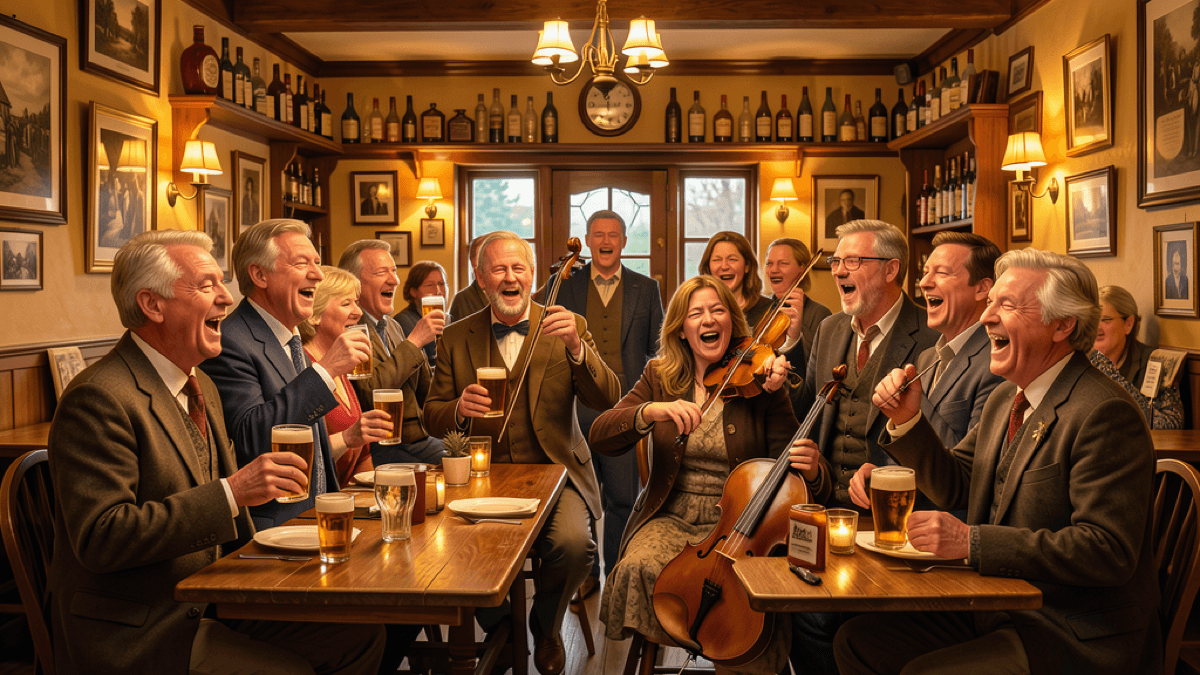
This guide shows you how to use Irish Gaelic songs as a complete language learning tool. You will get the best traditional songs to start with, a method for turning lyrics into vocabulary, the pronunciation secrets that singing reveals, and the cultural context that makes each song meaningful. You do not need a musical ear to benefit; you only need to sing along.
Why Songs Are a Superpower for Learning Irish
The memory science behind music is well established. Melody, rhythm and repetition give your brain a structure to hang language on, which is why you can remember song lyrics from decades ago while forgetting yesterday’s vocabulary list. Songs turn word learning into an earworm that plays on repeat in your head.
For Irish Gaelic specifically, songs are a gift because they showcase the language at its most musical. The rhythm of Irish speech, its stresses and its flowing consonant clusters, are all laid out clearly in song. Singing forces you to produce sounds at a slower, more deliberate pace than fast conversation, which is exactly what a beginner needs.
Songs also carry the culture. A sean-nós lament, a rebel ballad and a children’s counting song each reveal a different face of Irish life. When you learn the words, you learn not just a language but the memory and identity of a people.
The Best Traditional Irish Songs to Start With
If you are new to singing in Irish, begin with well-known, slower, lyric-driven songs where the words are sung clearly. Folk standards with existing English versions are an excellent bridge because you already know the story.
Mná na hÉireann (Women of Ireland) is a beloved air, often performed at a gentle pace. It celebrates Irish women in rich, poetic language and is ideal for absorbing adjectives and descriptive phrases. Its melody is famous even to people who never speak a word of Irish.
Óró, sé do bheatha ‘bhaile is a rousing welcome song full of energy and historical weight. It is catchy and repetitive, which makes it perfect for memorising key greetings and the grammar packed into its phrases.
An Droimeann Donn Dílis and other love and lament songs follow slower melodic lines suited to careful pronunciation practice. These ballads use the old vocabulary and the séimhiú and urú mutations in natural, repeated contexts, so you absorb the rules passively while you sing.
Choose three songs and learn them deeply rather than rushing through a hundred. Deep familiarity with a handful of songs trains your ear and mouth far more than surface familiarity with a play list.
How to Learn a Song Step by Step
A structured method turns a pleasant singalong into real language progress. Do not simply play the song and hope for the best.
Start by listening to the song twice without any text, focusing only on the sound. Then read the lyrics in Irish alongside the English translation, noticing which words you can already recognise. Next, listen again while reading, and pause after each line to repeat it aloud. Finally, sing the whole song without the text, and keep going until it flows.
This mirrors the input and output loop that drives all language acquisition. The ear takes in the sound, the eye links it to spelling, and the mouth reproduces it. Because a song compactly repeats its most important structures, each verse cycle reinforces what you learned in the previous one.
If a particular vowel or consonant cluster is hard, isolate that phrase and loop it slowly. Songs are patient teachers; they will wait while you master the tricky bit.
Pronunciation Secrets Hidden in the Singing
Singing reveals aspects of Irish pronunciation that the written page cannot. In traditional singing, especially in the unaccompanied sean-nós style, the singer ornaments the melody with slides, cuts and vocal trills, and the words ride those ornaments in ways that display the true character of the vowels.
Pay attention to the way singers join words and glide between syllables. This helps you understand connected speech, where words are not separated with the stiff pauses of textbook audio. Many learners say they understand songs better than conversations precisely because the melody slows the transition between words.
Remember that the broad and slender consonant distinction, so central to Irish, is audible in songs. As you sing, your mouth naturally moves toward the correct position because you are matching a sustained pitch. Singing is one of the few exercises where good pronunciation feels effortless.
Vocabulary and Grammar You Absorb through Lyrics
Songs are miniature grammar courses in disguise. Because they repeat phrases many times, you absorb constructions without conscious effort.
Verb forms, for example, appear in context within the story of the song, and by the third verse you have heard the past, present and future forms of a verb tied to a consistent meaning. The same applies to prepositions, possessives and the mutations they trigger. A song gives you a living demonstration of grammar that a rule table can only describe abstractly.
To make the most of it, pull five new words out of each song and add them to a spaced repetition deck. When you later review that word, you will hear the song’s melody in your head, which dramatically strengthens the memory trace. FlashLearn Irish Gaelic is built for exactly this kind of audio-linked vocabulary training.
The Cultural Heart of Irish Song
Music is the emotional core of the Irish language. For centuries, when the language was under pressure, songs carried its history, humour and sorrow from one generation to the next. Songs like the emigrant laments reflect the hardship of a diaspora that took Irish speakers away from their homeland, while the rebel songs reflect the fight for cultural survival.
Understanding this context deepens your learning. When you sing a lament, you are not just pronouncing words, you are joining a tradition of remembrance. When you sing a humorous drinking or work song, you are sharing in the everyday joy of the language. That emotional connection is what transforms a language from an academic exercise into something you love.
Modern singers continue this tradition, blending traditional tunes with contemporary arrangements. Listening to both old and new performers shows you that Irish is not a museum artefact but a living language, still being sung, still being changed, still being loved.
Common Mistakes When Learning from Songs
A few habits diminish the value of singing as a learning tool. The first is relying on phonetic transcriptions that butcher the spelling; you learn the sounds but never connect them to the real words. Always learn from the authentic Irish text.
The second is only ever listening with English subtitles on automatic. Always use them, and you never build the direct connection between the Irish sound and meaning. Scripts and translations have their place, but your ear needs to work at forming its own associations.
The third mistake is undervaluing repetition. Learners often skip a song once they can follow it, chasing novelty at the expense of depth. Singing the same songs over and over, months apart, is precisely what builds the automatic recall that signals real progress.
Let the Music Carry You
Irish Gaelic song is a doorway into the language that is as joyful as it is effective. The melodies lift the words, the lyrics teach the grammar, and the tradition roots your learning in a living culture. Whether you start with a haunting lament or a lively welcome song, the most important step is to begin singing.
Pair your singing habit with daily spaced-repetition review to lock in the vocabulary. To understand where these songs come from, the Irish folklore and mythology guide gives the stories behind the culture, and learning Irish with TV and radio shows you where music and speech meet on screen. For structured vocabulary that survives, the Irish Gaelic app comparison helps you pick a tool, and the beginners guide ties the whole method together.
With the FlashLearn Irish Gaelic app you can listen, learn and sing your way to real fluency, because it turns the vocabulary in each song into reviews that reappear just as you are about to forget them. One song today is worth ten vocab lists, and you will still be humming it next year.
1 Comment
Comments are closed.
[…] Begin with slow, clear songs and short poems. Traditional airs and lullabies often have simple, repetitive lyrics, ideal for a beginner. As your ear improves, move to faster tunes and modern artists. Poetry read aloud is also excellent because it is built to be spoken and heard. Irish learners will find a parallel Irish song guide. […]