Irish Gaelic Colours and Adjectives: How to Describe Your World in Irish
When you step outside in Ireland, the sky, the sea, the grass and the winter wool all demand description. Learning Irish Gaelic colours and everyday adjectives is one of the fastest ways to start speaking descriptively, and it is well within reach even for a complete beginner. With thirty core colours and about twenty common adjectives, you can describe almost anything you see, feel or own.
Many learners assume Irish colour words are arbitrary and hard to remember. The truth is that the most important colours are short, distinctive and lead directly into the language’s famous adjective agreement. This guide lists the essential Irish colours, explains the pronunciation traps and the glas versus gorm distinction that trips everyone up, and gives you the adjectives for describing people, weather, food and places.
The essential Irish colours
Every beginner should learn the twelve colours below first. They cover the vast majority of descriptions you will want to make in daily conversation.
dearg (red) bán (white) dubh (black) glas (green) gorm (blue) buí (yellow) donn (brown) corcra (purple) liath (grey) oráiste (orange) pink is bándearg órga (golden)
Three of these words carry a trap. Glas means green, but it can also mean grey when it describes an animal, water or even a particular shade of skin. Gorm means blue, but historically it could mean a deep dark colour or green in certain contexts on the island. The pair buí (yellow) and bán (white) are easy to confuse at speed, so drill them together as a set: buí and bán rhyme and both start with b.
To describe hair, Irish uses redhead as rua (which is a brownish-red), blond as fionn, and brown as donn. So a red-haired person is duine rua, a blond person is duine fionn, and the famous Irish brown hair is gruaig dhonn.
Pronunciation traps in colour words
Two colour words cause most beginners to stumble on pronunciation. The first is gorm, which is pronounced like gur-um and not like the English word norm. The second is buí, pronounced bu-ee, which many learners wrongly rhyme with boy. Say both aloud several times and let your mouth get used to them.
The word liath (grey) is pronounced like lee-ah, and it carries a broad final sound that is easy to truncate. Practise liath slowly and you will avoid the most common pronunciation slip. Finally, remember that corcra (purple) keeps its stress on the first syllable, cor-cra, unlike what an English speaker might expect.
If you want to say coloured or colourful, the adjective is dathúil, and the noun for colour is dath (plural datha). You can build useful phrases such as dath mo chumhaid (the colour of my memory) or simply ask cé dath é seo? (what colour is this?).
Adjective agreement: describing nouns
The most distinctive feature of Irish colour adjectives is that they must agree with the noun they describe. This agreement shows up in two ways: adjective order and word-endings.
The first rule is order: in Irish, the adjective follows the noun. A red car is carr dearg, a white house is teach bán, and a blue sea is farraige ghorm. This is the opposite of English, and it is the habit you must train first.
The second rule is mutation. After a feminine noun, the adjective often takes a new initial sound. The word gorm becomes ghorm, bán becomes bhán, and dearg stays after masculine nouns but changes after feminine ones. A masculine black dog is madra dubh, while a feminine black hen is cearc dhubh. The pattern is governed by the broad and slender endings of the noun.
The golden rule to remember is that describing a well-known object that you have heard aloud fixes the correct form better than any chart. When you learn a new colour, learn it together with one feminine and one masculine noun, such as carr gorm and farraige ghorm, so both forms enter your memory at once.
Describing people with adjectives
Beyond colours, a small set of everyday adjectives lets you describe the people around you. These are the words you will reach for constantly in conversation.
tall, high: ard small: beag young: óg old: sean beautiful: álainn handsome: dathúil kind: cineálta strong: láidir tired: tuirseach happy: sásta
Combine these with the verb to be and you can describe almost anyone. Is é an fear ard ceart (he is the tall man), Is í an bhean óg í (she is the young woman), and Tá sí álainn (she is beautiful). Notice again that the adjective follows the noun: fear ard, not ard fear.
For the weather and emotions, a second set of adjectives is extremely useful because Irish speakers talk about the weather with great enjoyment:
fuar (cold) te (hot, warm) fliuch (wet) triomaithe (dry) grianmhar (sunny) garbh (rough, harsh) ciúin (calm, quiet)
With these you can say an lá fuar (the cold day), an teach fliuch (the wet house), or Tá an lá grianmhar (the day is sunny). The adjective ciúin is especially pleasant, because it also carries the sense of quiet or still.
Describing food, drink and places
Because food and landscape are central to Irish life, a handful of adjectives for taste and place will serve you well. For the senses at the table, use blasta (tasty), milis (sweet), searbh (bitter), agus trá (moist) as needed. For places, use álainn (beautiful), ciúin (calm), garbh (rugged) and speisialta (special).
An beár is speisialta. (The pub is special.) An toran is blasta. (The cake is tasty.) Is í an gort is álainn. (The field is beautiful.)
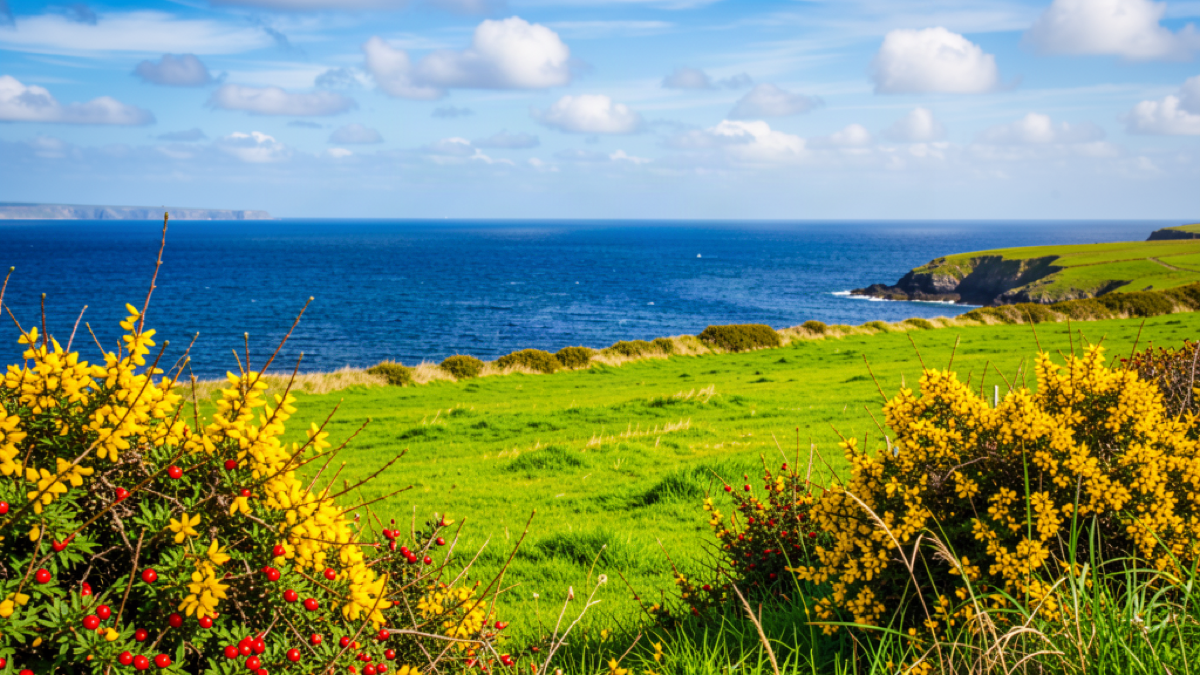
When you describe a place, remember to reuse the colour vocabulary from earlier. A rugged green field is gort glas garbh, and a calm blue lake is loch gorm ciúin. Stacking a colour and an adjective this way is a natural Irish habit, and it is the perfect way to practise agreement.
How to practise colours and adjectives
The best way to make these words stick is to name things out loud. Take a short walk and describe every object you see in Irish, first with a colour and then with an adjective. Say carr dearg, farraige ghorm, teach bán, and then add a second layer with carr dearg beag (small red car) and farraige ghorm ciúin (calm blue sea).
Language apps such as FlashLearn Irish Gaelic are ideal for this because they give you the same vocabulary as reusable cards, letting you drill colours, adjectives and agreeing noun phrases in short sessions. Combine ten minutes of card review with a daily walk of naming things, and the words will become automatic.
Conclusion
Irish Gaelic colours and adjectives form the vocabulary you need to describe the world around you, from the glas fields and gorm sea to the fuar weather and blasta food. Learn the twelve core colours, beware the glas and gorm distinction, respect adjective agreement with feminine and masculine nouns, and build up your describing adjectives for people, weather and places. With daily naming practice and a flashcard routine, you will go from knowing a handful of words to painting your whole world in Irish in a matter of weeks.
Start learning Gaelic today
Build your Scottish and Irish vocabulary with flashcards built around spaced repetition.