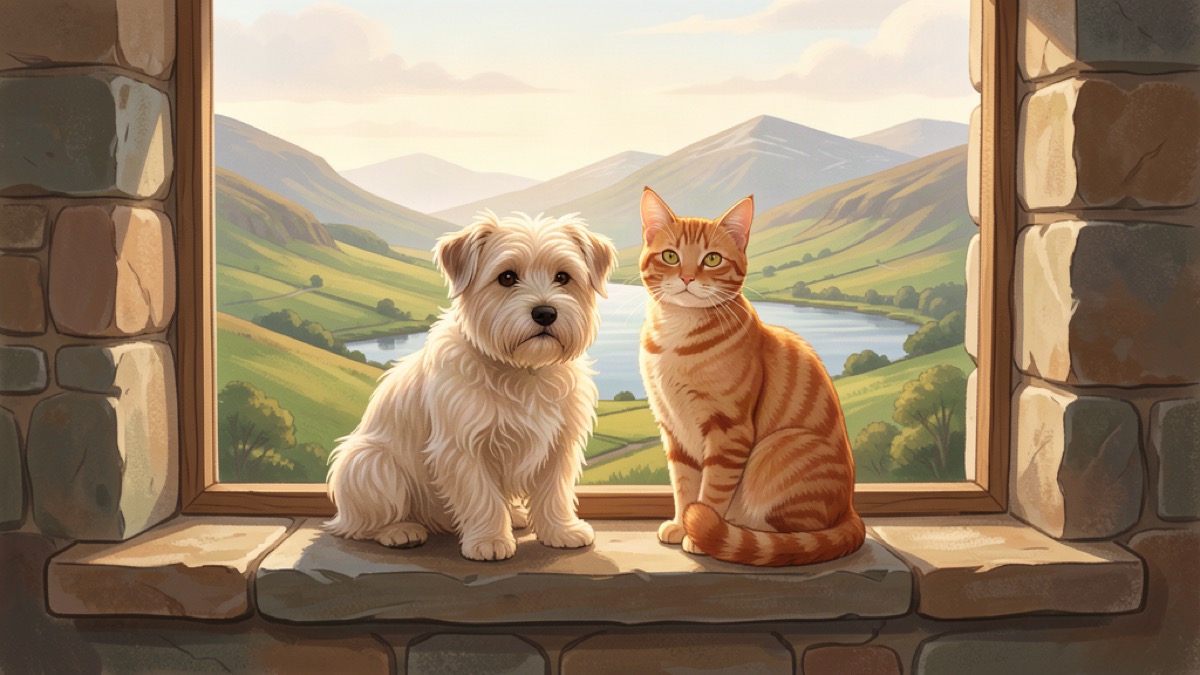
Scottish Gaelic for Pets: Cats, Dogs and Words for Animal Lovers
For many learners, the first conversations they ever have in a new language are not with a person. They are with a cat on their lap or a dog at the back door. Pets are patient, they never correct your grammar, and they are the perfect excuse for daily practice. Scottish Gaelic is a wonderful language for this, because the words for animals are short, warm, and full of character, and because your pet will not care if you get the lenition wrong.
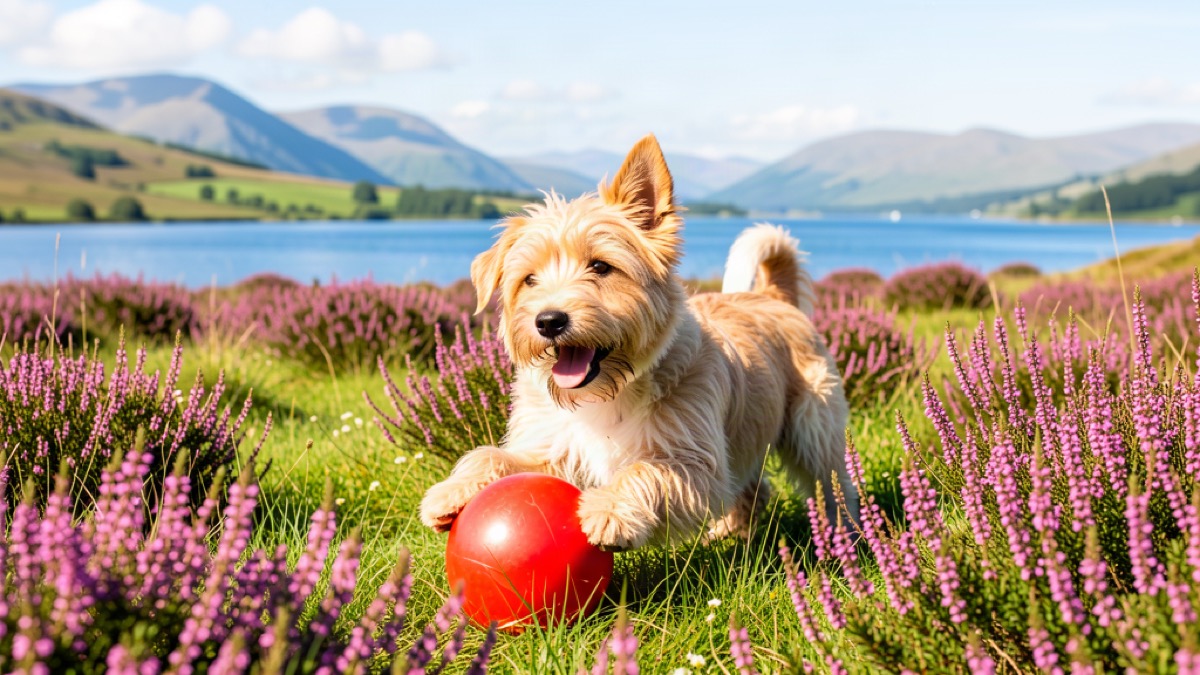
This guide gives you the essential Scottish Gaelic words and phrases for pets, from the basics like cù (dog) and cat (cat) to commands, terms of endearment, and the little sentences that turn animal care into a language lesson. No prior Gaelic is required, though a little foundation in pronunciation will help you say the ach- and ch- sounds the way a native would.
The Core Pet Vocabulary
Let us start with the nouns you will use every day. Scottish Gaelic for cat is cat, which is convenient, but beware: in Gaelic cat is grammatically masculine and pluralizes unusually, so you will meet cait (cats) and a chat (his cat) as you go. The word for dog is cù, pronounced roughly like “koo,” and the plural is coin.
Other essential animal words:
- cù (koo) – dog (plural coin)
- cuilean (KOO-lan) – puppy
- cat (cat) – cat
- piseag (PISH-ug) – kitten
- eun (ayn) – bird
- éisg (ayshk) – fish
- each (ekh) – horse
- mart (mart) – cow
- caora (KOO-ruh) – sheep
- gobhar (GOV-er) – goat
For the wilder side of the animal kingdom, from red deer to the birds of the glens, our guide to Scottish Gaelic nature and wildlife vocabulary is the natural companion to this one.
Commands: Making Yourself Understood
Pets respond better to short, repeated, consistent commands, and this is where a little Gaelic goes a surprisingly long way. Here are the command forms you will actually use:
- Thig! (heek) – Come!
- Suidh! (soo-ee) – Sit!
- Laigh! (lye) – Lie down!
- Fuirich! (FOO-reekh) – Stay!
- Thalla! (HAL-uh) – Go, shoo!
- Na seo! (na sheo) – No! (literally “not this”)
- Bi sàmhach! (bee SAW-ukh) – Be quiet!
- Trobhad a seo! (TROV-at a sheo) – Come here!
Notice how many commands end in the familiar imperative endings. Scottish Gaelic forms these commands from the same verb roots you will meet elsewhere, so learning Suidh! here gives you the verb suidh (sit) for free in other contexts. This is one of the reasons thematic learning works: you are never learning just one word, you are learning a verb family.
Terms of Endearment for Your Pet
Scottish Gaelic is wonderfully affectionate, and pets collect endearments like a cù collects sticks. Some are the same words you would use for a person you love, because in Gaelic affection does not discriminate by species.
- mo lèannan (moh LAY-an) – my darling
- mo ghràidh (moh ghrye) – my love
- mo chridhe (moh khree-uh) – my heart
- an laoigh (an lee) – the calf (used as a loving term)
- gràidh (grye) – love, dear one
- beag (beg) – small, little (as in mo bheag, my little one)
The word for endearment itself is a term you will want: gràdh (grah) means love, and gràdhach (GRAH-ukh) means loving or affectionate. If you want to tell your pet they are loved, the phrase Tha gaol agam ort (I have love for you) is the direct route, and it is the same love language we cover in our guide to saying I love you in Scottish Gaelic.
Little Sentences for Daily Life
Pets thrive on routine, which makes them ideal conversation partners for a language learner. Here are short sentences to fold into your day:
- Tha an cù ag iarraidh biadh – The dog wants food
- Bheil an cat ag iarraidh uisge? – Does the cat want water? (with the question form)
- Tha mi a’ toirt an cù a-mach – I am taking the dog out
- Tha an cuilean a’ cluich – The puppy is playing
- Tha e a’ cadal – He is sleeping
- Tha an piseag glan – The kitten is clean
- Feumaidh mi am biadh a thoirt dha – I need to give it food
The word for food here is biadh (bee-ugh). You will also meet bainne (milk), feòil (meat), and eòrna no coirce (barley or oats, for an outdoor animal). Note the pattern tha … ag iarraidh, which means “wants” and is the same construction you will use with people. Our article on everyday Gaelic phrases for beginners expands this into a fuller set of daily sentences.
The Grammar Pet Rule: Lenition You Will Hear
Scottish Gaelic has a feature called lenition: certain consonants soften after the article and in a few other positions. You already met examples above (mo ghràidh, mo chridhe) where the ch and the silent gh appear because an m was used. You will hear lenition again in pet talk because so much of it starts with “my” (mo) or a preposition.
The good news for the pet owner is that you do not need to master the theory to be understood. Your pet will happily respond to mo chac (my little dog, where cù has lenited to chac) long before you can explain why the c became a ch. But if you want the rule, our guide to Scottish Gaelic lenition explained is the clearest walkthrough we have, and it will suddenly make dozens of phrases you already know click into place.
Pronunciation: The Sounds Pets Force You to Learn
Animal words are a pronunciation gym. The word gobhar (goat) teaches the broad gh- sound. The word each (horse) teaches the final ch. And the most famous one, cù, is a great example of the long ù vowel that Scottish Gaelic learners often wrestle with. If you can say cù, cat, and each cleanly, you have already cracked three of the trickiest Gaelic sounds.
For a systematic walk through these sounds, our Scottish Gaelic pronunciation guide breaks down every vowel and consonant, and it is worth reading alongside this article because pets will give you endless chances to repeat the words. There is no better practice than calling a dog across a field.
Common Pet Names and Their Meanings
Pet names are a doorway into the culture. Many Highland dogs carry names that are also everyday Gaelic words: Bran (raven), Cailleach (an old woman, or often simply a strong name for a fierce dog), Donn (brown), Ruadh (red-fox coloured), Gorm (blue), and Fionn (fair, white). Cats are just as likely to be called Cailleach or Beag or Dòmhnallach after a family name. Understanding these names turns a trip to a dog park into a gentle Gaelic lesson, and it gives you a stock of easy, useful words.
If you want to name a pet with meaning, the adjectives above are a good start because they double as colour and description words: donn, ruadh, bàn (white), dubh (black), geal (bright, white). Our guide to Scottish Gaelic colours and adjectives covers the full set and pairs perfectly with this naming section.
A Short Conversation to Practise
Here is a tiny exchange built from this article’s vocabulary. Read it slowly, then again out loud:
- Person: Dè canar ris a’ chù? – What is the dog called?
- Answer: Canar “Bran” ris. – He is called Bran.
- Person: A bheil e math? – Is he good?
- Answer: Tha, tha e glè mhath. – Yes, he is very good.
- Person: A bheil e bigeadh? – Does he bite? (literally, does he bite anything)
- Answer: Chan eil, tha e socair. – No, he is gentle.
This exchange packs several dozens of the most frequent Gaelic words and phrases into ten seconds of scripted speech, and it is exactly the kind of conversation a pet owner will actually have. Practise it with your own animal’s name and you convert a vocabulary list into a real-world skill.
A Practice Homework: Introduce Your Pet in Gaelic
Here is a simple exercise that will lock in most of this vocabulary. Say these three sentences about your own pet out loud:
- Seo mo chù – This is my dog
- Canar “Bran” ris – He is called Bran
- Tha e dìleas agus gràdhach – He is loyal and loving
Even if your pet is a cat, a hamster, or a goldfish, the frame works. Swap cù for cat or your own animal, swap Bran for your pet’s name, and you have a five-second introduction in fluent, natural Scottish Gaelic.
Pets give you the rarest gift a language learner can have: a willing, non-judgmental conversation partner who is available morning, noon and night. Use the commands, repeat the endearments, and build a few routine sentences, and you will find your daily Gaelic practice happening without a single lesson plan. Before long your four-legged (or feathered, or finned) friend will be the best teacher you never paid.