
The Irish Fada: How Accent Marks Change Meaning in Irish Gaelic
Look at a word like “sean” (old) and then at “séan” (to deny or to portend), and you might think the little line above the vowel is decoration. It is not. That slanting accent, called the fada, is one of the most important features of the Irish language. It lengthens the vowel it sits on, and because vowel length changes meaning, the fada can turn one word into a completely different word. Ignore it and you risk saying the wrong thing entirely.
This guide explains what the Irish fada is, which vowels take it, how it changes pronunciation and meaning, and how to type it and learn it.
What is the fada in Irish
The word “fada” simply means “long”. The fada is a diacritical accent placed over a vowel to show that the vowel is pronounced for a longer duration. In Irish, long and short vowels are distinct building blocks of meaning, so the fada is not a stylistic choice: it is part of the spelling of the word.
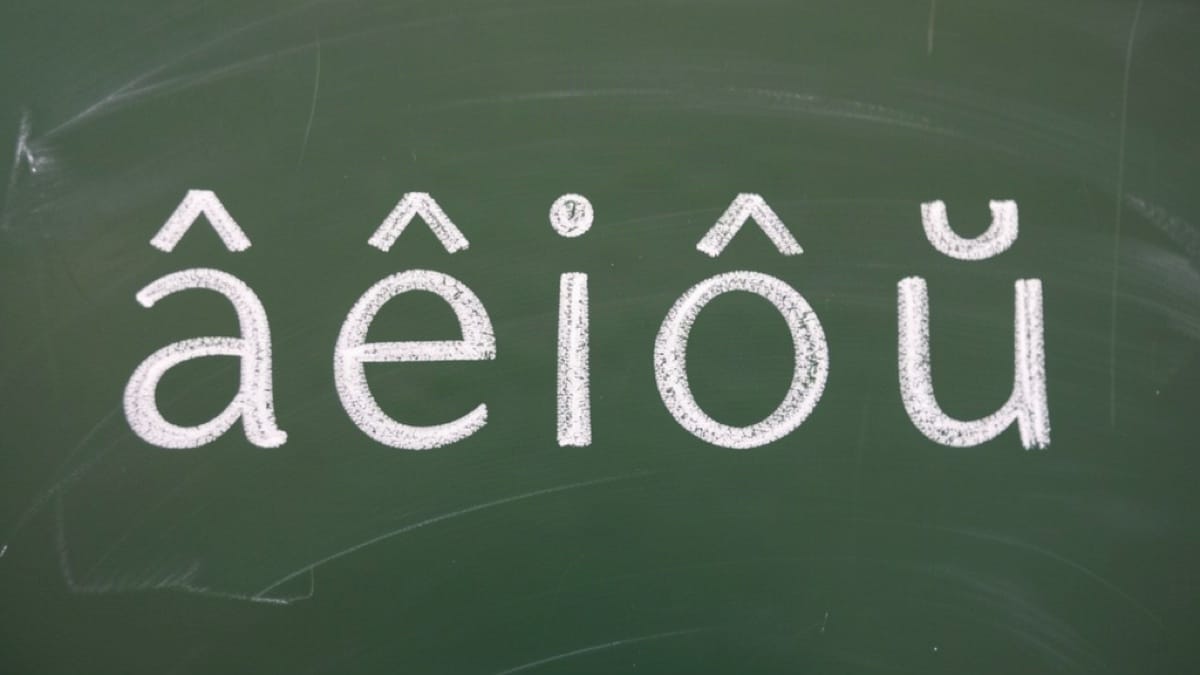
There are fadas on five vowels: á, é, í, ó and ú. There is no fada on the letter “u” alone in a way that confuses, though “ú” exists too. Each accented vowel is simply the long version of its unaccented counterpart.
Placement matters. The fada always sits on the vowel, and it always leans to the right, like a small slash rising from bottom left to top right. When a word has more than one vowel, the fada marks which one carries the long sound.
How the fada changes pronunciation
An unaccented vowel in Irish is short, pronounced crisply and quickly. The same vowel with a fada is held longer. This is the same distinction English speakers know in pairs like “bit” and “beat”, or “not” and “note”: the vowel length carries meaning, and the fada is the written signal for it.
The Irish “a” in “cat” (cat) is short and flat. The “á” in “cá” (where) is held longer and sounds closer to the “a” in “father”. Similarly, “i” in “sin” (that) is short, while “í” in “sín” (stretch) is long and deeper. These are real, audible differences that native speakers use to tell words apart.
When an “h” follows a vowel, it changes things further, and when a fada appears before certain consonant groups it can also affect the vowel’s colour. But the core rule is simple and powerful: the fada lengthens the vowel, and length is meaningful.
Words that change meaning with a fada
The clearest way to understand the fada is through word pairs that differ only in the accent. These minimal pairs are the reason learners must not treat the fada as optional:
- sean (old) versus séan (to deny or refute).
- cara (friend) versus cára (a kind of sleigh or cart).
- bord (table, board) versus bórd (older variant of the same or a poetic form).
- tá (I am / is) comes from “ta”, and the fada is what makes it the verb.
More practically, the fada often separates a question word from a noun. “Cá” (where) with a fada is a question; without it, “ca” is not a standard standalone word. “Sé” (he) and “se” (question particle used in Munster) are distinguished by the fada. Get the accent wrong and a sentence can slip from a statement to a question or from a pronoun to something else entirely.
The most famous pair for beginners is probably “le” (with) and “lé” (with, in certain literary or fixed uses), but the everyday burden falls on knowing which words take a fada by heart, because there is no simple rule covering every noun.
When the fada is essential and when it is dropped
Standard Irish requires the fada in standardised spelling, and you should use it in writing. However, in casual digital communication, many Irish speakers drop fadas to save time, just as English speakers drop apostrophes in texting. This is common but not standard, and in formal writing, exams and professional contexts, the fada remains mandatory.
A useful convention is that the fada always goes on a capital vowel in uppercase writing too. “Á”, “É”, “Í”, “Ó” and “Ú” all carry the accent even in headings and titles. This is a small detail that marks out careful Irish writing.
For a learner, the honest advice is simple: learn the fada as part of each word, not as a separate afterthought. When you memorise “tá”, memorise that it has a fada. When you memorise “cá”, the accent is part of the word.
How to type the Irish fada
On an iPhone or iPad, holding down a vowel key brings up a menu of accented options, and you simply slide your finger to the accented letter. On a Mac, the “Opt” key combined with the letter produces the accented version. On Windows, you can set the Irish keyboard layout, which maps the fada vowels directly.
If you are learning on a smartphone app, the keyboard will handle this for you. The important skill is not typing but recognising the fada when you read and remembering it when you write, because it changes the identity of the word.
The fada in the wider Gaelic accent family
The fada is not unique to Irish. Scottish Gaelic uses the same accented vowels, and the two languages share a common system of long vowels, so many of the patterns you learn in Irish transfer directly across. In both, á, é, í, ó and ú mark length, and in both the accent can distinguish one word from another.
What differs is how the vowel is coloured. An Irish “í” and a Scottish “í” are both long, but the exact sound can shift from region to region and from one dialect to the next. This is a reminder that the fada marks duration first and quality second. If you learn it as a length marker rather than a fixed sound, you stay correct whichever dialect you study.
There is also a practical link to the older forms of the language. The fada represents sound changes that have been part of Irish writing for centuries, and it connects modern learners to the full history of the language. When you write “tá” correctly, you are writing the same word that learners used a thousand years ago, and the accent has carried it all the way.
How to learn the fada quickly
The fastest way to master the fada is to make it part of every word you learn from the first day. Do not memorise “ta” and add the accent later; memorise “tá” as a single unit, with the accent built into your mental image of the word. This small habit prevents most fada errors before they start.
A second habit is to read out loud. When you read an Irish sentence aloud, the fadas force you to hold the vowel, and your ear learns to expect the long sound. Reading without the accent, by contrast, trains your eye to skip it. Combine reading aloud with listening to native audio, and the accent becomes something you hear as well as see.
Third, test yourself in contrast. Flashcards that pair “sean” with “séan”, or “cá” with “cara”, force your brain to notice the accent as the only signal of meaning. Reviewed regularly, these pairs become reflexes, and the fada stops feeling like a chore and starts feeling like a natural part of the language.
Learn the fada with targeted flashcards
Because the fada changes meaning, the smartest way to learn it is in contrast. Build a deck of minimal pairs: “sean” and “séan”, “tá” and its base, “cá” and “cara”. Put each accented word on one side with its meaning, and its unaccented twin on the other. Reviewing these side by side trains your eye to notice the accent automatically.
FlashLearn for iOS is built for exactly this kind of vocabulary work. Create a “fada pairs” deck, add audio for correct pronunciation of the long vowels, and review daily. The spaced repetition engine makes sure the pairs that trip you up come back until they are second nature.
The FlashLearn web app covers Irish, Scottish Gaelic and many other languages, so your fada deck works across phone and browser. Start with the pairs that matter most for everyday speech, add new ones as you meet them in songs and podcasts, and the accent will stop being a mystery and start being a reflex.
The fada looks like a tiny detail, but it is the key that unlocks correct Irish. Master it, and every word you read and write becomes clearer, longer, and true to its meaning.