
Scottish Gaelic Lenition Explained: How Consonant Changes Alter Meaning
Every language has a set of rules that quietly change the way words sound depending on the sentence they are in. In Scottish Gaelic, the single most important of these rules is lenition, or slenderisation as it is sometimes called. If you have ever seen a word begin with a different letter on one line than it did on another, yet still mean the same thing, you have already met lenition. Understanding it unlocks the structure of the whole language.
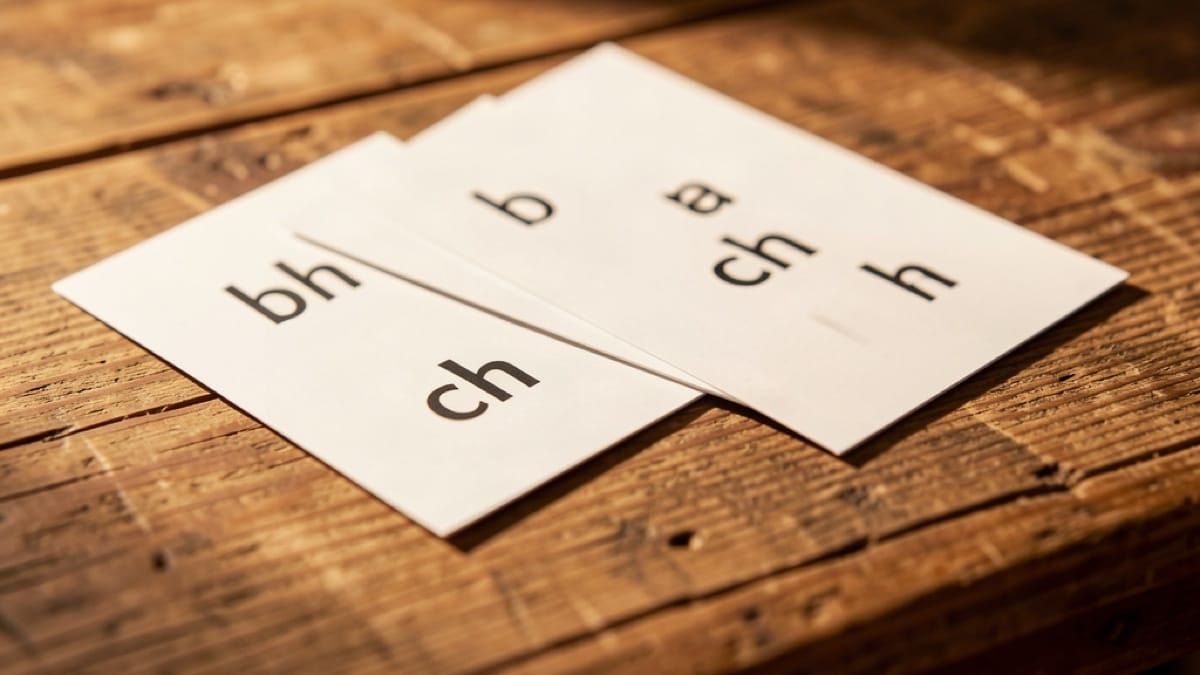
This guide explains what Scottish Gaelic lenition is, when it happens, how to recognise it and how to practise it without confusion.
What is lenition in Scottish Gaelic
Lenition is a process that softens the first consonant of a word. When a word is lenited, an “h” appears after the initial consonant, and that consonant is pronounced in a softer, breathier way. The classic example is the letter “c”: the word “cat” (cat) is pronounced with a hard “k” sound, but when lenited it becomes “chat”, pronounced with a breathy “kh” sound rather than a hard “k”.
The leniting consonants are: b, c, d, f, g, m, p, s and t. Each one, when followed by an “h”, changes its sound. A “p” becomes the breathy sound in a whispered “p”, a “b” becomes a soft “v”-like sound, a “d” becomes the “y”-like sound found in words like “young”, and so on. The letters l, n and r can also be “softened”, though in a slightly different way.
This is not decoration. In Gaelic, lenition is grammatical. It marks grammar, so getting it right changes the meaning of a sentence.
When does Gaelic lenition happen
Lenition is triggered by many grammatical situations, and the good news is that they are predictable. Once you learn the main triggers, you can spot lenition coming before it happens.
The most common trigger is the possessive adjective. “My” and “your” in Gaelic cause the following word to lenite. “My cat” is “mo chat”: the “m” in “mo” (my) triggers lenition of “cat” to “chat”. Compare this with “a cat” on its own, “cat”, where no lenition occurs. This tiny change is how Gaelic tells you who owns what.
Another major trigger is feminine nouns in certain positions. When a feminine noun follows the word “the” (an), it lenites where a masculine noun would not. This is one of the reasons learners must track the gender of every noun: gender controls lenition.
Prepositions also trigger lenition. Words like “to”, “from”, “on” and “under” can cause the following noun to lenite, depending on the exact preposition and the noun’s gender. “To the sea” and “under the sea” can show different patterns, all governed by the same set of rules.
After certain numerals and in many set expressions, lenition appears too. The word for “two” (dha) lenites the following noun, as in “dha bhràthair” (two brothers, with the “b” of brother becoming a soft “v”).
How lenition changes sounds
The easiest way to think about lenition is as “adding an h” and softening the consonant. But the actual sound change is different for each letter, so it helps to hear it rather than read about it. Here are the core pairs:
- b to bh, pronounced like a “v” in English.
- c to ch, pronounced like the sound in the Scottish word “loch”, a breathy throat sound.
- d to dh, pronounced like the “y” in “yes”, or in some regions like a soft “g”.
- f to fh, which is usually silent. This is the trap: a word beginning “fh” often has no sound at all at the start.
- g to gh, pronounced like the “y” in “yes” or a soft throaty sound depending on the vowel.
- m to mh, pronounced like a “v”.
- p to ph, pronounced like a “f”.
- s to sh, pronounced like an “h”, as the “s” disappears into a breath.
- t to th, pronounced like an “h”, as the “t” becomes a breath.
This list looks intimidating, but every lenited form follows a consistent pattern, and the lenited sound is always one step “softer” than the original. The silent “fh” and the “s” to “h” change are the two that surprise learners the most.
Why lenition is essential for meaning
Lenition is not an optional flourish; it carries grammar. Consider the difference between “a cat” and “my cat”: the only signal that ownership has changed is the softened “c”. Remove the lenition and the sentence becomes meaningless or changes meaning entirely.
Take the famous example of going to a place. “To the pub” and “my pub” will laugh, lenite and un-lenite as the grammar requires. A learner who has not internalised lenition will hear native speakers and assume they are mispronouncing words, when in fact the lenition is doing real work.
For this reason, lenition is one of the first things a serious course drills. It is not an advanced topic; it appears in the very first lessons about possessives and the definite article, because it is baked into the way Gaelic builds even the simplest sentences.
How to practise lenition effectively
The most effective approach is to learn lenition as part of whole phrases rather than as an abstract rule. Instead of memorising “c becomes ch”, learn “mo chat” (my cat), “do chat” (your cat), “a chàr” (his car) and “a càr” (her car). This way, the sound change is attached to real meaning, and your ear learns to expect the soft consonant when a possessive word appears.
Audio is essential. Because some lenited forms are silent (“fh”) and others make sounds English speakers rarely produce (“ch”, “gh”), you need to hear them repeatedly. Practise out loud, slow down the audio, and repeat each lenited phrase several times until the softened initial consonant feels natural.
Flashcards are a strong tool here. Build a deck where the prompt is a possessive plus a noun, and the answer is the correctly lenited phrase. Drill “mo chat”, “do bhàta” (your boat), “a mhàthair” (his mother) until you can produce the softened form without thinking. This is exactly the kind of recall that a spaced repetition system trains better than any other method.
Build your lenition deck with FlashLearn
You do not need a classroom to master lenition; you need consistent, well-ordered practice. FlashLearn for iOS lets you create a dedicated lenition deck, pairing each base word with its lenited forms and adding audio so the softened sounds stick in your memory. Review a few cards every day and the rules stop being rules and start being habits.
The FlashLearn web app covers Scottish Gaelic, Irish and many other languages, so the deck you build transfers across every device. Begin with the six most common trigger situations, add example phrases from songs and podcasts, and drill until a “my” or “your” automatically softens the word that follows.
Common lenition pitfalls and how to avoid them
Every Gaelic learner stumbles at the same points, and knowing them in advance saves a lot of frustration. The first is the silent “fh”. A word like “fhathast” (still) or “fhios” (knowledge) begins silently after lenition, so “tha fhios agam” (I know) sounds as if the “f” is not there at all. Learners who translate letter by letter can be baffled, but the rule is simple: after a leniting trigger, an initial “fh” is silent.
The second pitfall is remembering that the initial consonant is lenited, not the whole word. Only the first sound changes. “Mo chàr” (my car) lenites the “c” of “càr”, but the rest of the word stays exactly the same. Some learners, understandably, think the whole word is being transformed and end up over-correcting.
The third is gender. Because feminine nouns lenite in the definite article while masculine nouns often do not, a learner must know each noun’s gender before they can lenite correctly. This is why gender is not an abstract grammatical chore in Gaelic; it is a practical tool you use every time you open your mouth. Learn the gender with every noun, the way you would learn its meaning.
How Lenition appears in everyday Gaelic sentences
To bring the rules together, here are a few complete sentences that show lenition at work. “Tha mo mhàthair aig an taigh” breaks down as “tha” (is) plus “mo” (my, triggering lenition) plus “mhàthair” (mother, lenited from “màthair”). The softer “m” sound tells you the speaker is talking about their own mother.
“She a’ faighinn a còta” (she is getting her coat) shows the interplay of possessive and lenition with the feminine “a” (her), which lenites “còta” to “chòta” differently from the masculine “a” (his). Getting these two forms right is one of the clearest signals that a learner has moved past the beginner stage.
“Air a’ chladach” (on the shore) shows a preposition triggering lenition of “cladach” to “chladach”. Notice that the gender and the specific preposition both matter. You will meet these patterns constantly in songs, in BBC Alba programs and in everyday conversation, which is exactly why immersion learning reinforces lenition faster than drills alone.
Lenition looks like a barrier, but it is really the rhythm of the language. Learn to hear it, learn to produce it, and Scottish Gaelic will start to feel less like a set of exceptions and more like a living, breathing music that you can join.